
Drinking Water Preparedness – Storing Germ-Free Drinking Water for Extended Periods
We build our own water systems, so we had to ask: what actually makes stored water go bad? Here is what decides it, plus a checklist for filling, preserving and checking a tank.
On our blog, we write a lot about drinking water and self-sufficient travel. We never know exactly what to expect at our next campsite or what might be missing. Drinking water is essential, and you should never be caught unprepared. That’s why we’ve developed our own drinking water purification system that we can rely on both while traveling and at home:
 Sebastian Weiß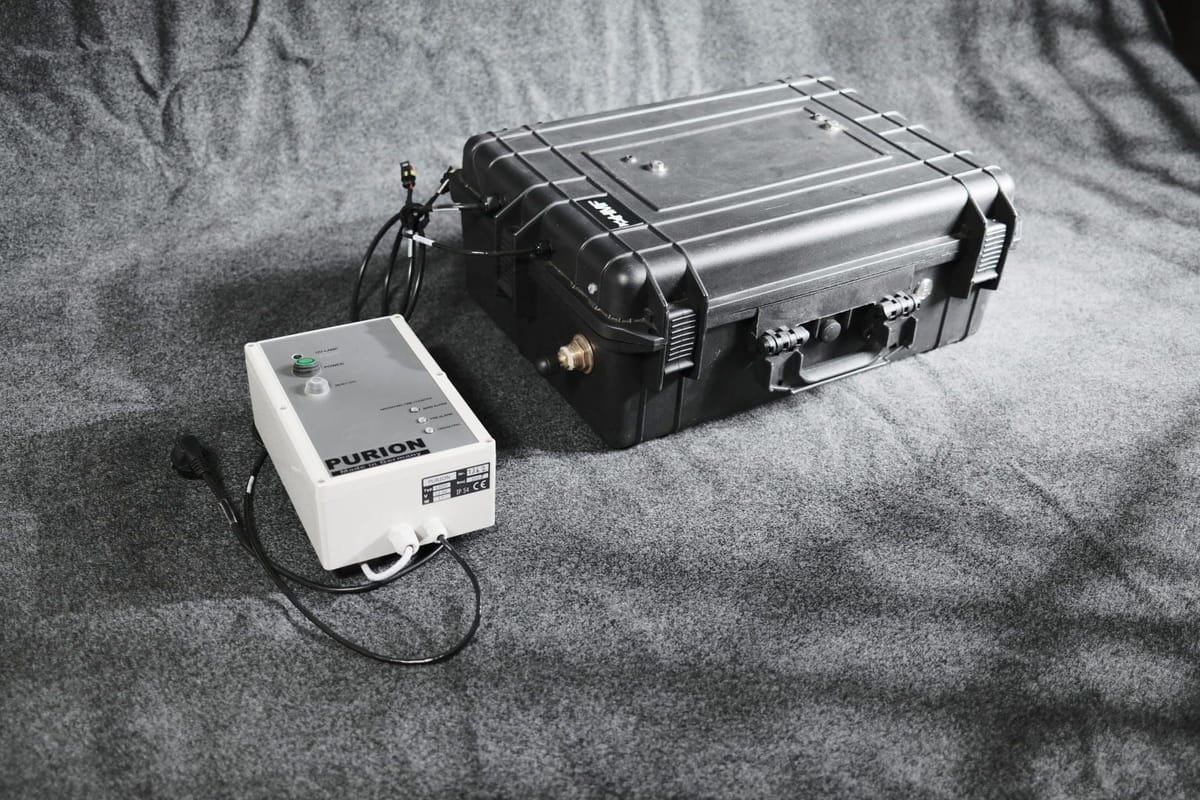
Being well-prepared also means having a certain level of basic security at home. In case of a burst pipe, a power outage, or heavy rainfall—situations where the drinking water must be additionally chlorinated by the water utility.
In this post, I’d like to show you how to use a small corner of our storage room to store drinking water. What do you need to keep in mind? What are the specific considerations you should be aware of?
About the Storage of Drinking Water
- Dark, cool, dry, and clean—that’s how the storage area for drinking water should be.
- The container should be clean and free of biofilm.
- The container should be made of white HD-PE plastic; transparency is acceptable as long as the containers are stored in a dark room. Make sure the description states “food-safe.”
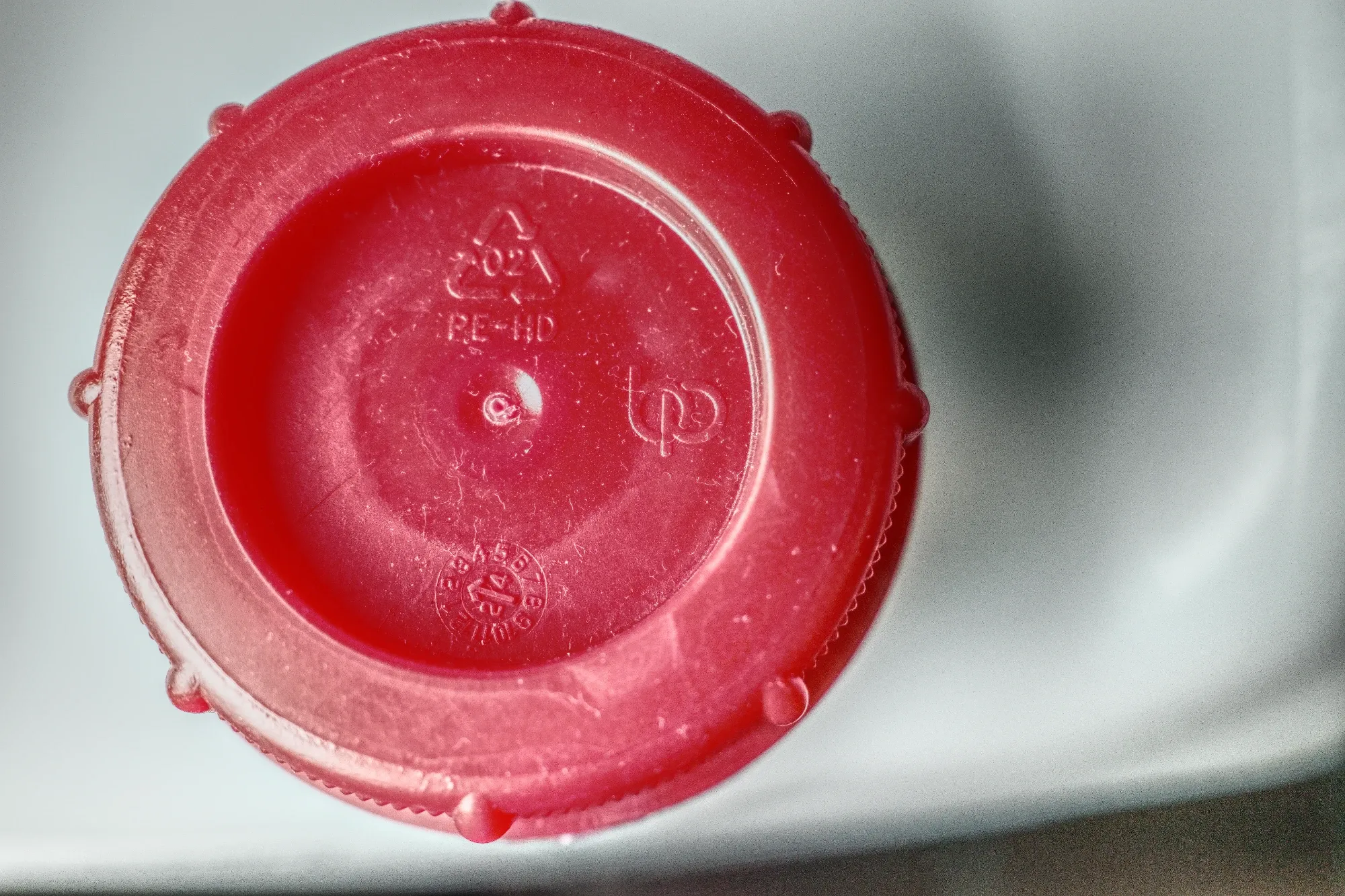
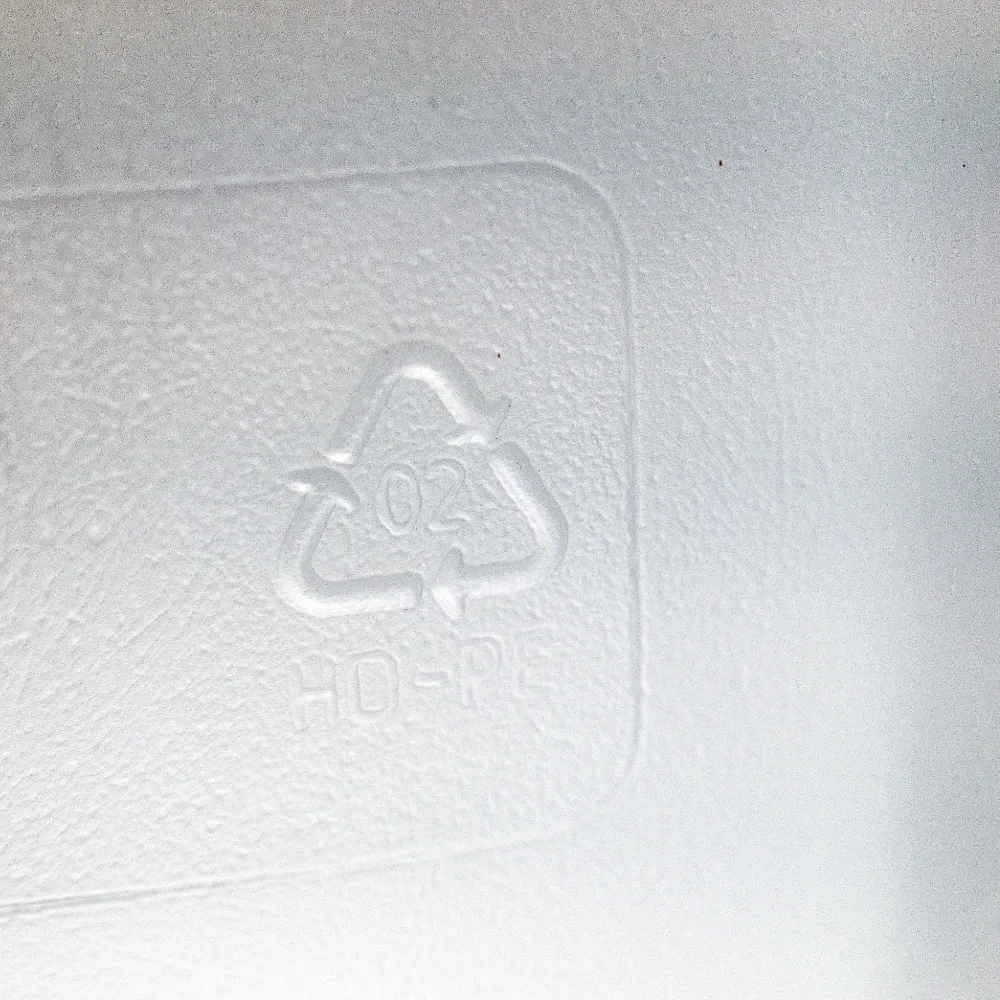
HD-PE marking on the container and lid. Important: it should be stated that the product is food-safe.
Check the labelling on the containers and ensure that they are made of food-grade plastic, such as HD-PE.
Other materials, such as stainless steel, are ideal for storing drinking water. Find out about the problems associated with plastic tanks in this article:
 Sebastian Weiß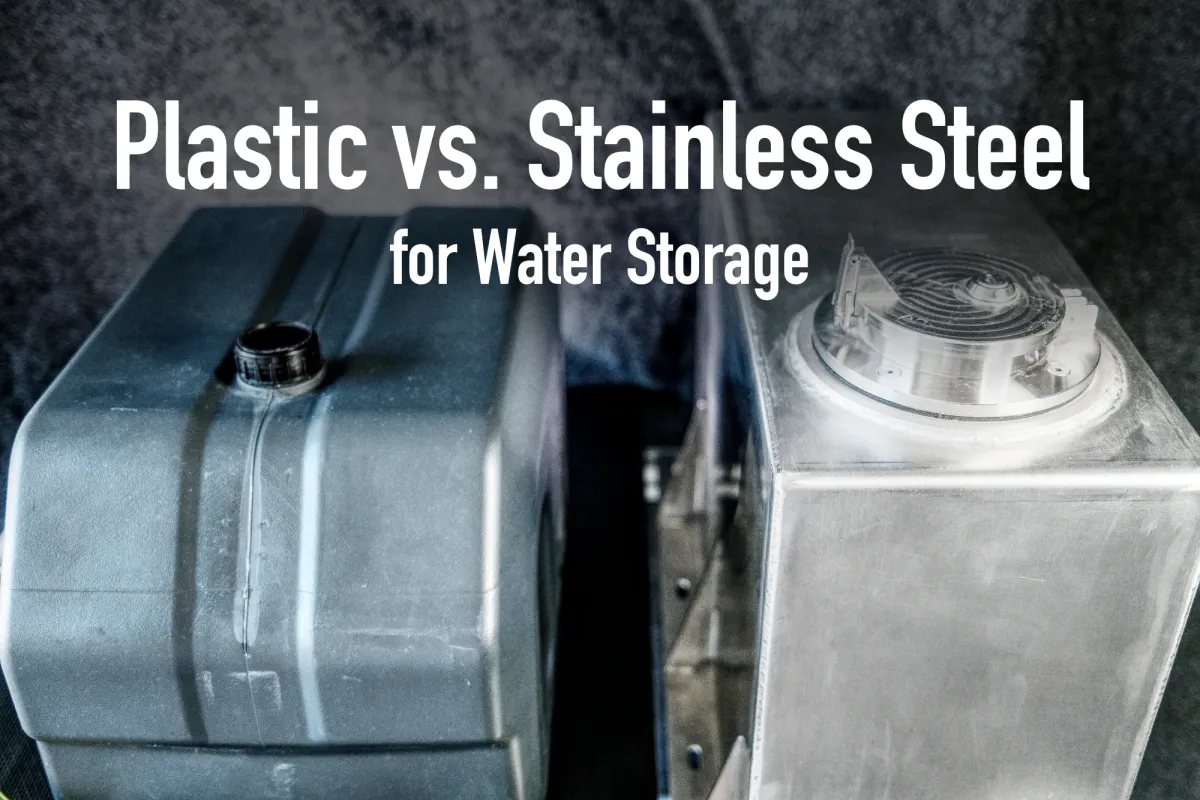
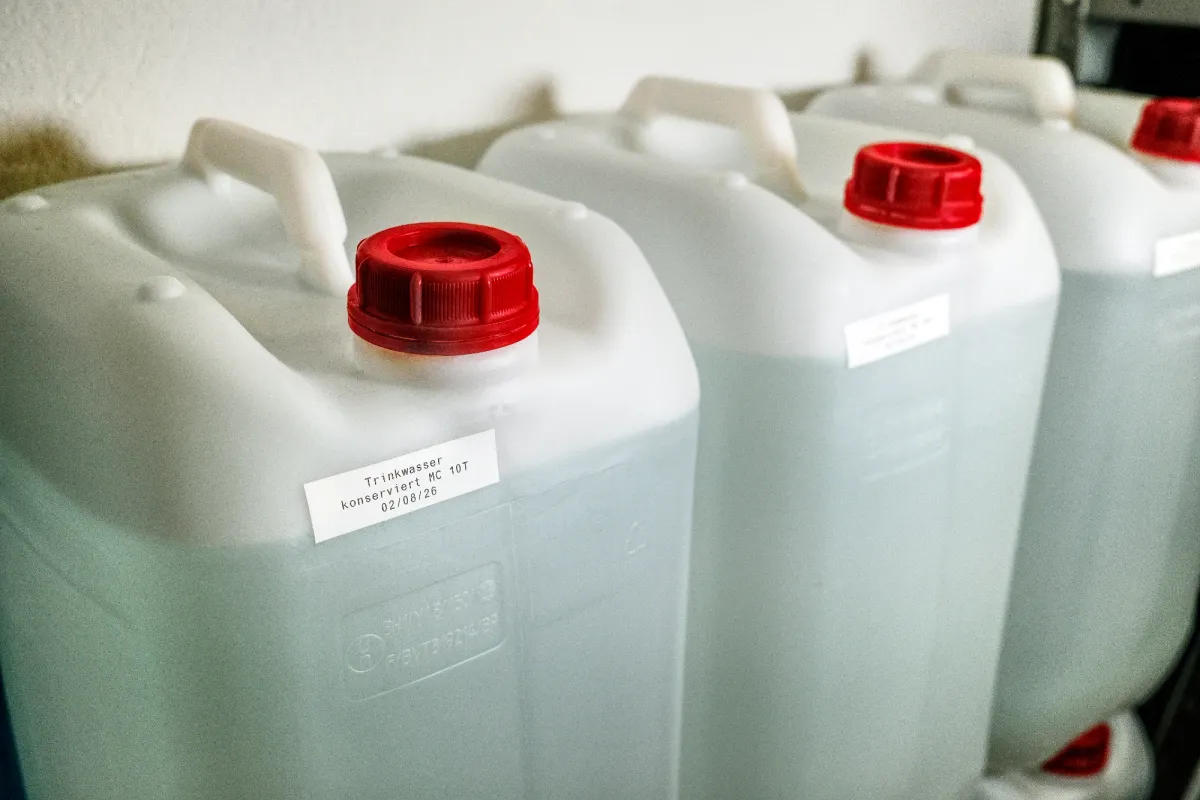
- The filling date and preservative should be indicated on the containers. The storage life may vary depending on the preservative. For Katadyn Micropur MC 10T, it is 6 months.
- We use Katadyn Micropur MC 10T. One tablet per 10 L of clear water. Follow the package insert!
- Katadyn Micropur MC 10T uses silver ions as a preservative. The good thing about this is that it leaves no unpleasant chlorine taste!
- Chlorine can be used if you suspect the presence of germs: Disinfection and preservation are two different things.
Here you can read about what to look out for when using Katadyn Micropur:
 Sebastian Weiß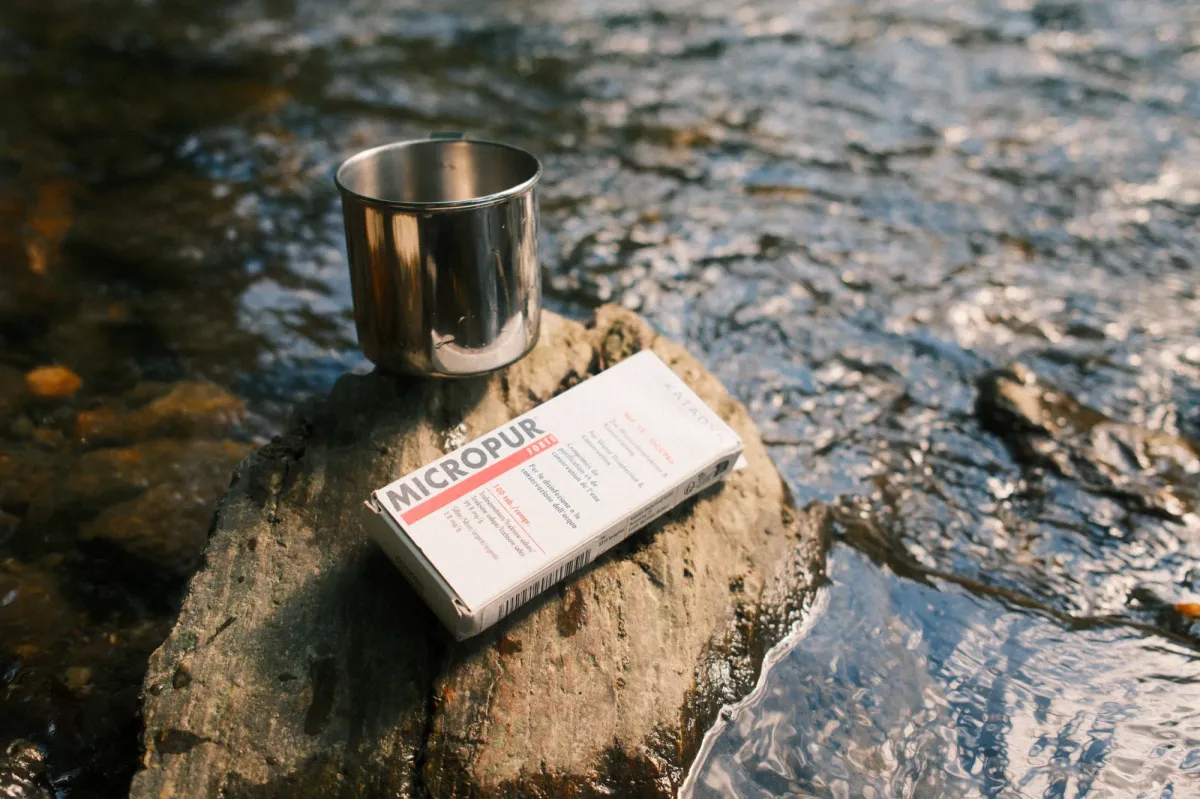
What is often forgotten?
Salt. It is essential for maintaining electrolyte balance and indispensable in cooking. People who drink a lot or sweat a lot lose salt – so a supply of salt is just as much a part of emergency stockpiling as water itself
Things to keep in mind
- Water source: The quality of the tap water is one of the main influences you can control.
- Storage: Dirt tends to enter less through the site itself than through openings, lids, taps and hoses. So keep the storage clean.
- Storage temperature: Temperature has a major impact on recontamination; recommendations include post-chlorination and annual tank cleaning. So store it in a cool place.
- Light: Light can contribute to algal growth inside the storage canisters. So keep it dark.
- Material. PE can age. So check the canisters once in a while. Read more about it here.
Source: Evison, L. and Sunna, N. (2001), Microbial Regrowth in household Water Storage Tanks. Journal - American Water Works Association, 93: 85-94. https://doi.org/10.1002/j.1551-8833.2001.tb09289.x
How much drinking water is needed?
- There are four of us: two adults and two children.
- I have 6 canisters, each with a capacity of 25 litres. These can be stacked on top of one another without any problems.
- This gives us a reserve of 150 litres of drinking water for our household.
- Guideline for an adult’s drinking water intake: 5 litres per day (drinking, cooking, personal hygiene)
- Guideline for a child’s daily water intake: 3 litres per day (drinking, cooking, personal hygiene)
For us (a family of four), that works out at around 16 litres a day for drinking, cooking and personal hygiene. That means our supply of 150 litres would last us about 9 days.
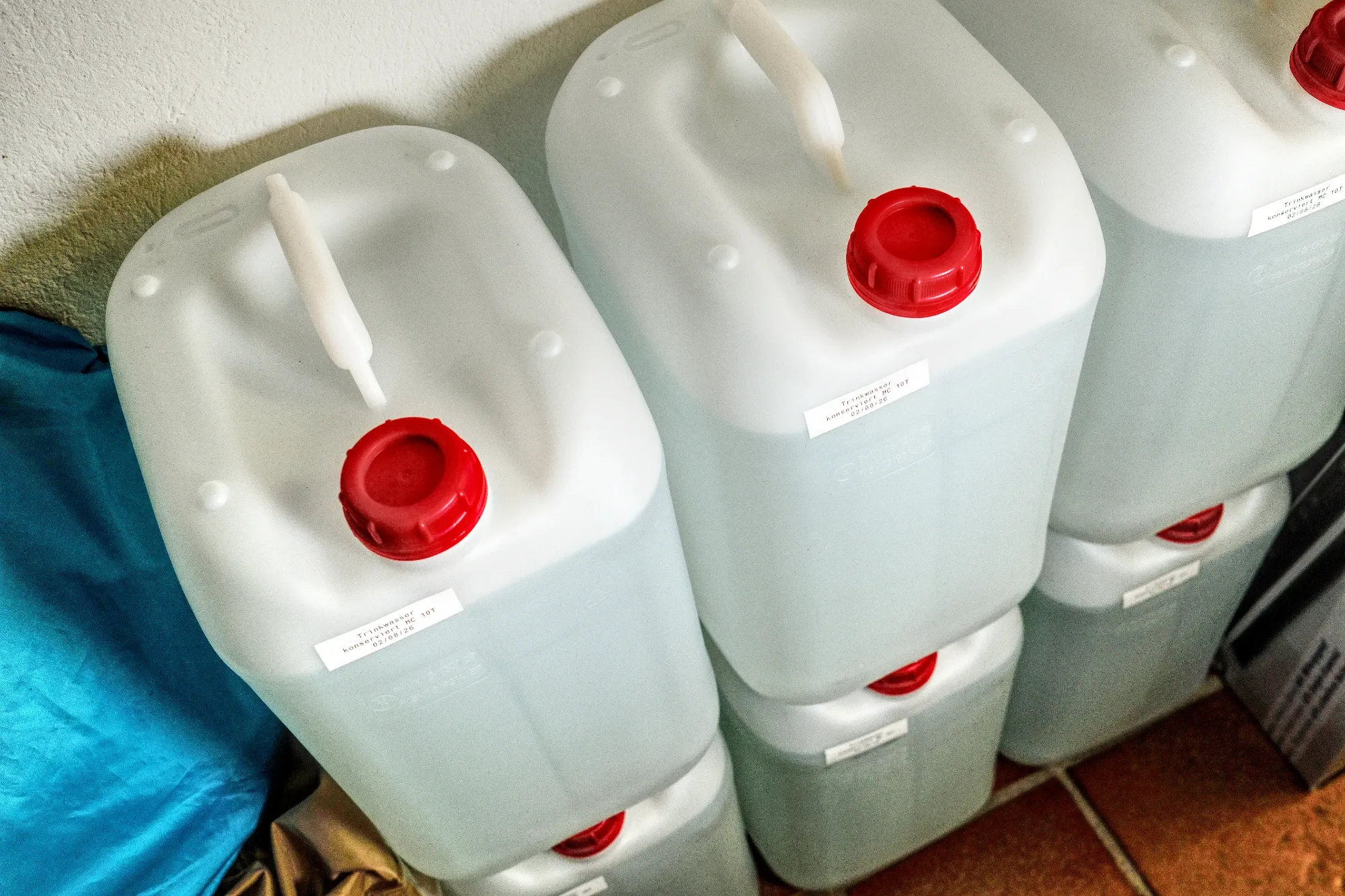
Labelling of the containers
I use the Brady M210 for this. You can also create QR codes directly. It’s great for labelling cables, and there’s a wide range of cartridges available.
The following information is required on the label:
- When was the water preserved?
- What preservative was used?
- You don’t necessarily need an expensive labelling machine.
You can also stick a note on the wall showing the storage date and the preservative – or label the containers with a waterproof pen. I also use the labelling gun to mark cables, so I need it quite often.
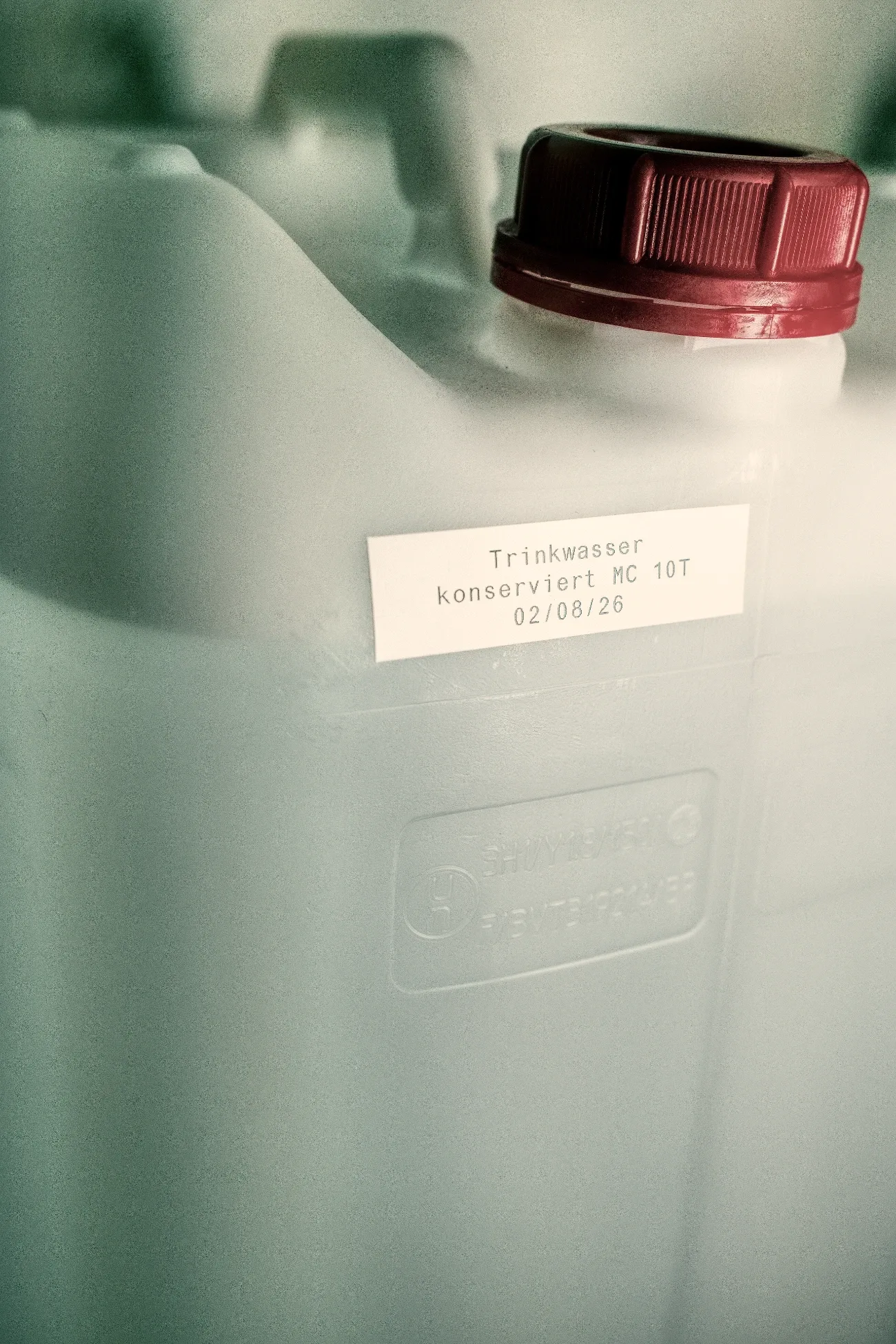
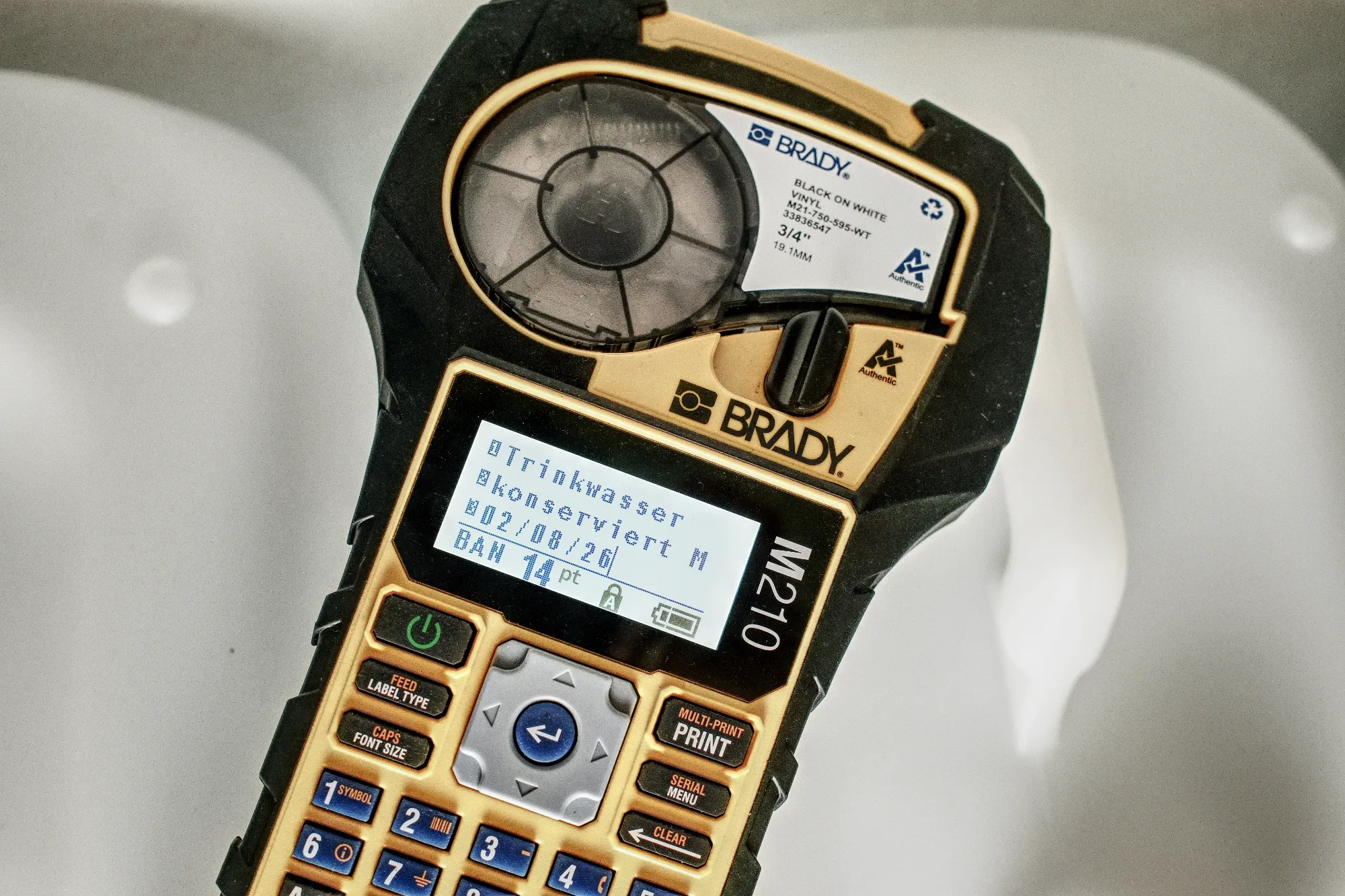
Label translation: Drinking water preserved with (Micropur) MC 10T on 02/08/26 using the labelling device "Brady M210"
So what do you need?
When storing drinking water, you should have the following items to hand, and you’ll also need some space for storage:
- HD-PE canisters
- Clean drinking water
- A preservative, such as Katadyn Micropur MC 10T
- Labelling for the canisters
- Optional: a hose
- Optional: a water tap
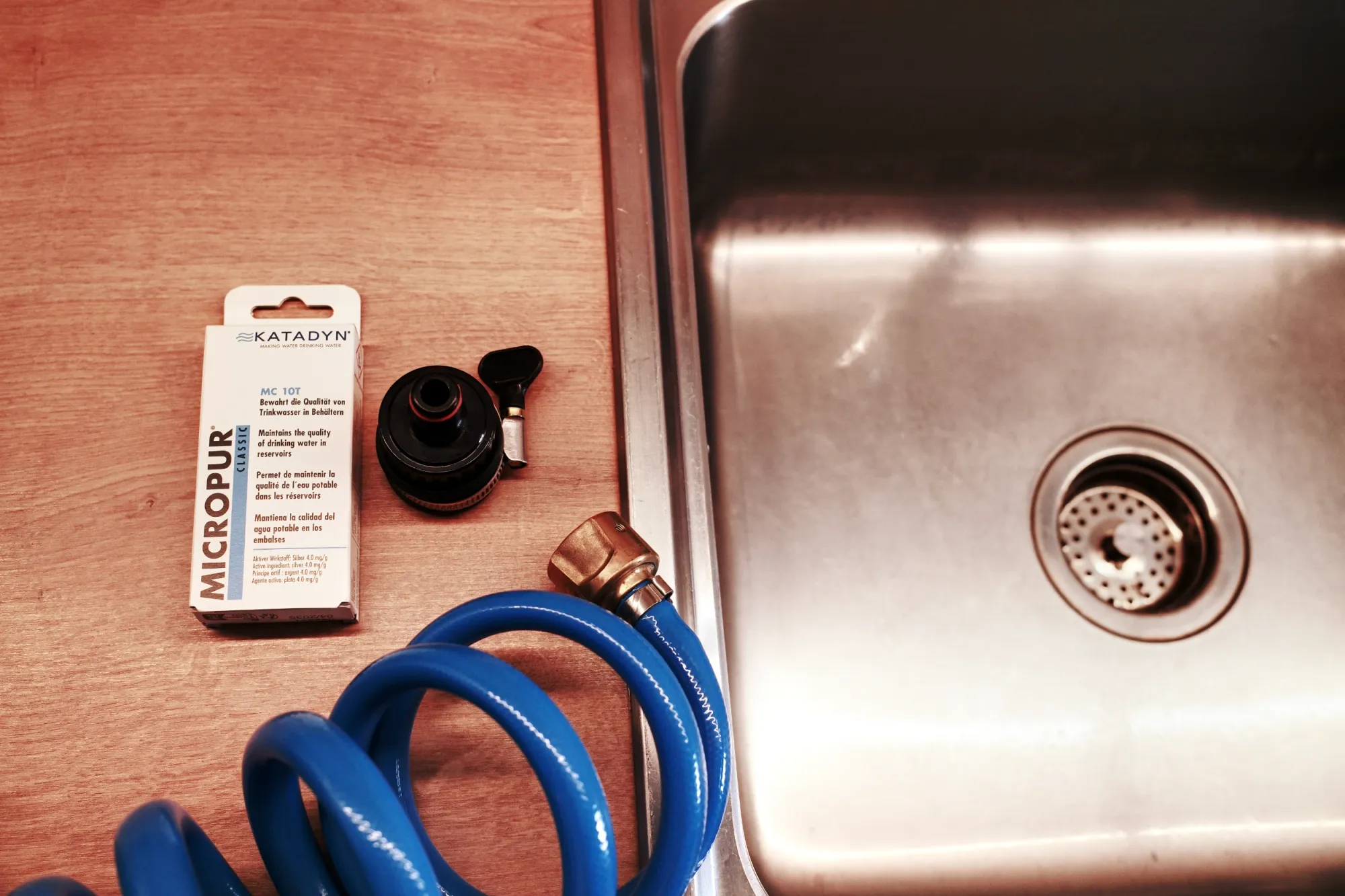
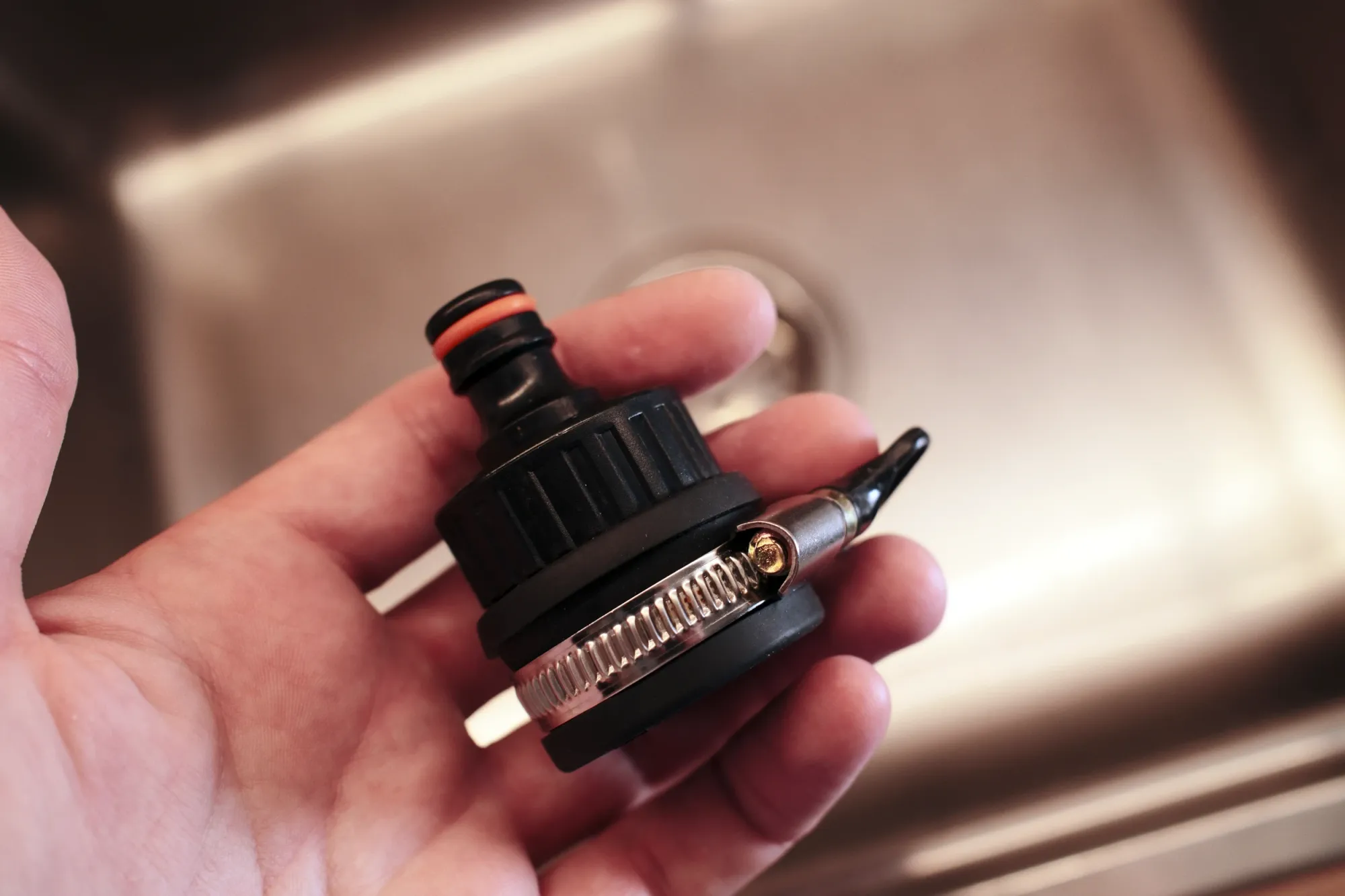
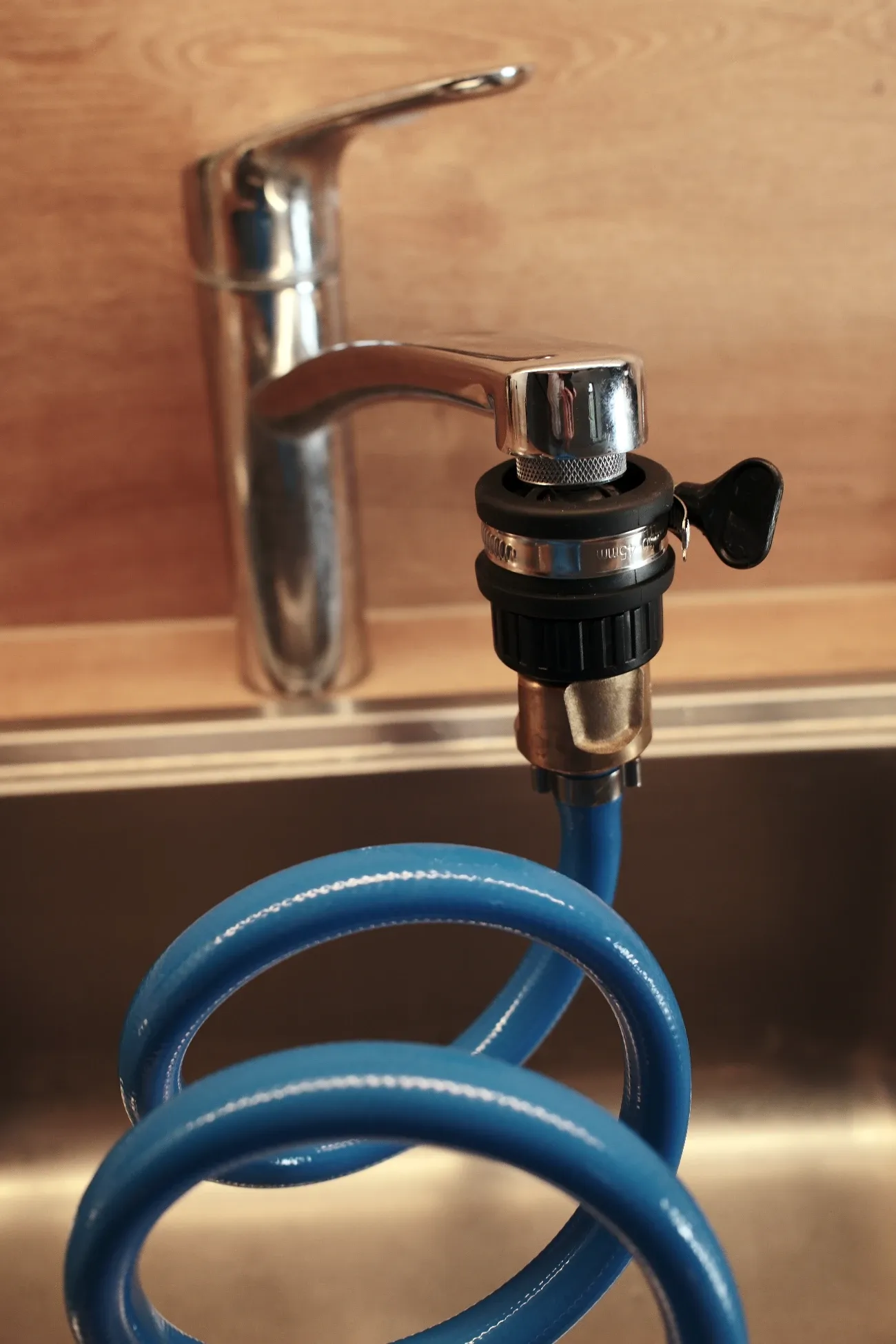
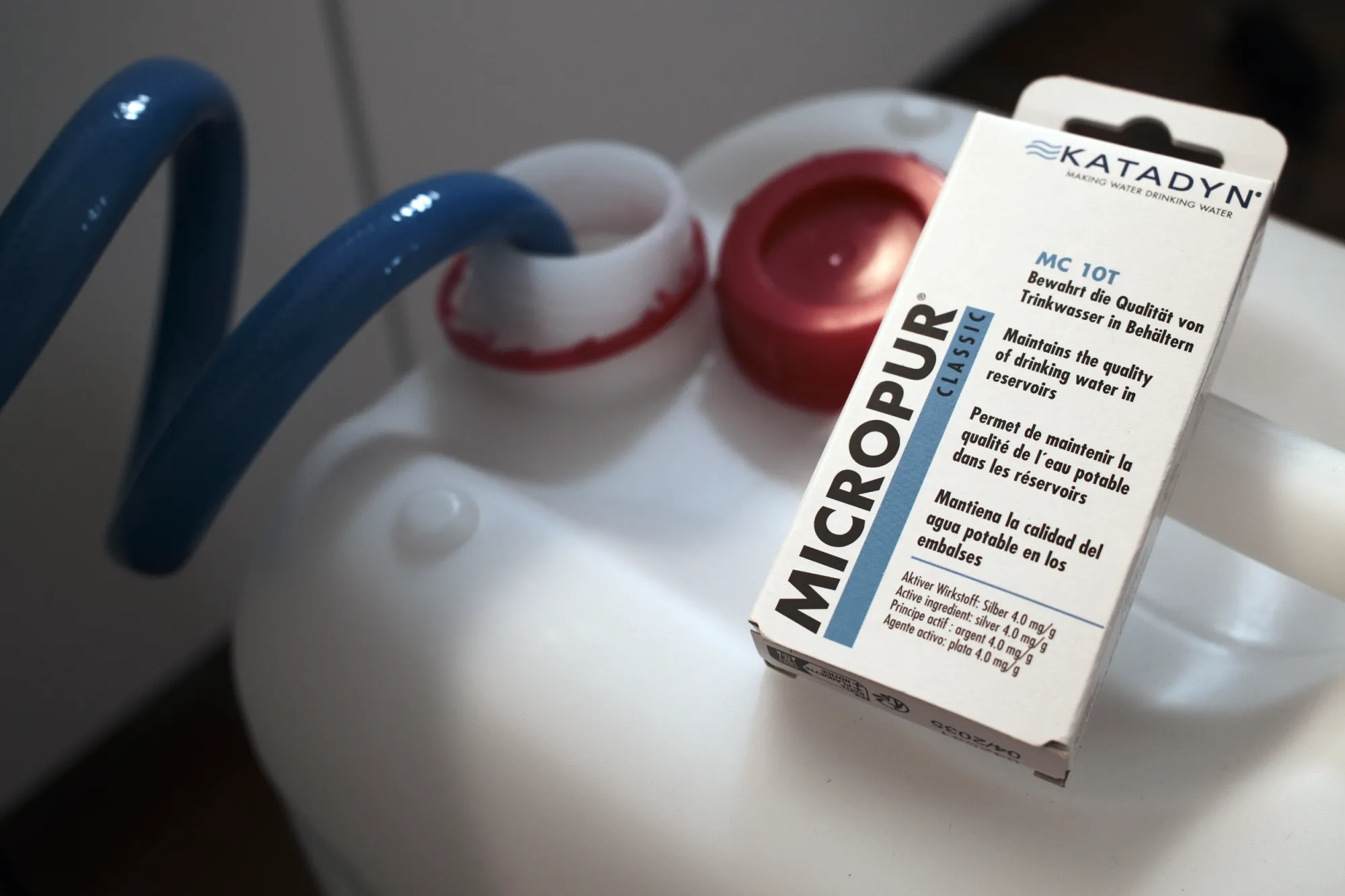
Using a hose, conservation agent, and water thief for filling up the canisters at home
Am I done now?
No, once the water has been stored, the tasks change. The storage location and the containers should now be checked and cleaned regularly.
A random sample should be taken regularly to ensure that the water is safe.
Preparing your water before drinking it is the best thing you can do. This ensures it is filtered and sterilised, so you can enjoy it straight away. To this end, I have developed a portable drinking water treatment system that you can use at home or whilst travelling, and which provides you with drinking water straight away:
 Sebastian Weiß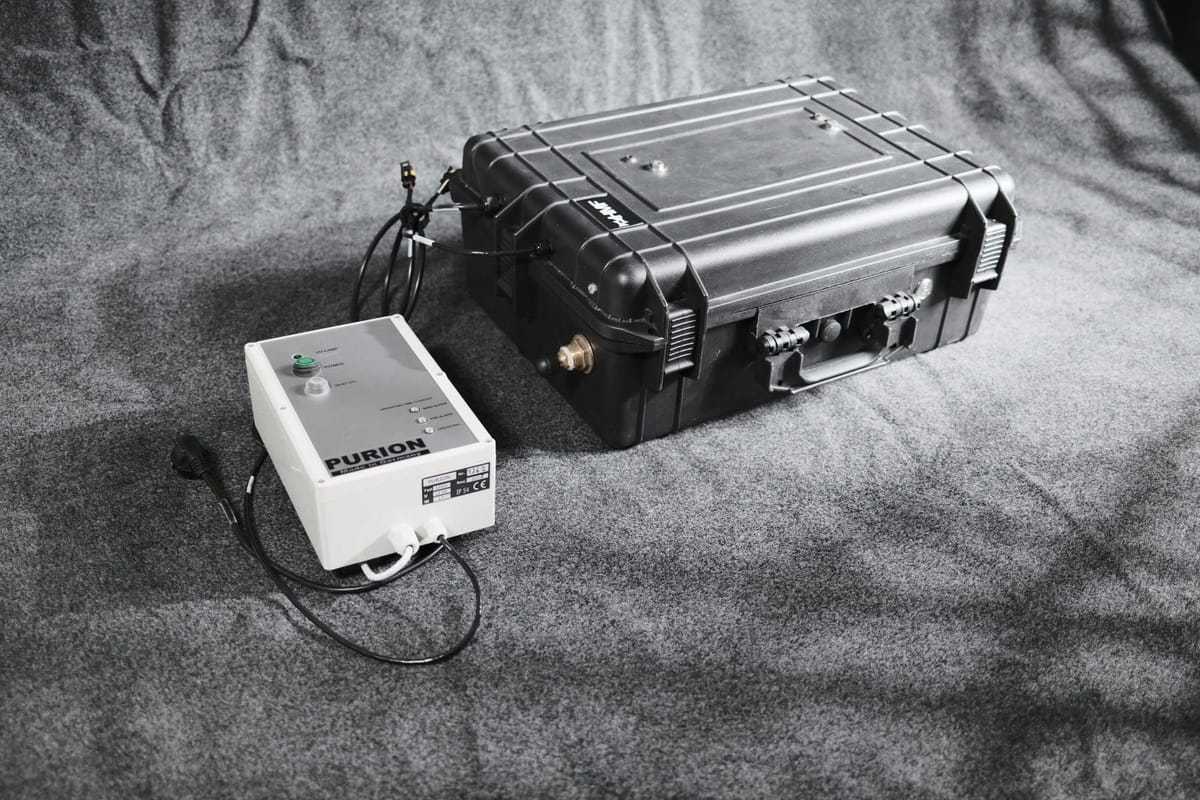
To keep track of what you’ve stored, you can use digital tools such as HomeBox. But more on that later...