
Water Storage for Overlanding - Why We Choose Stainless Steel
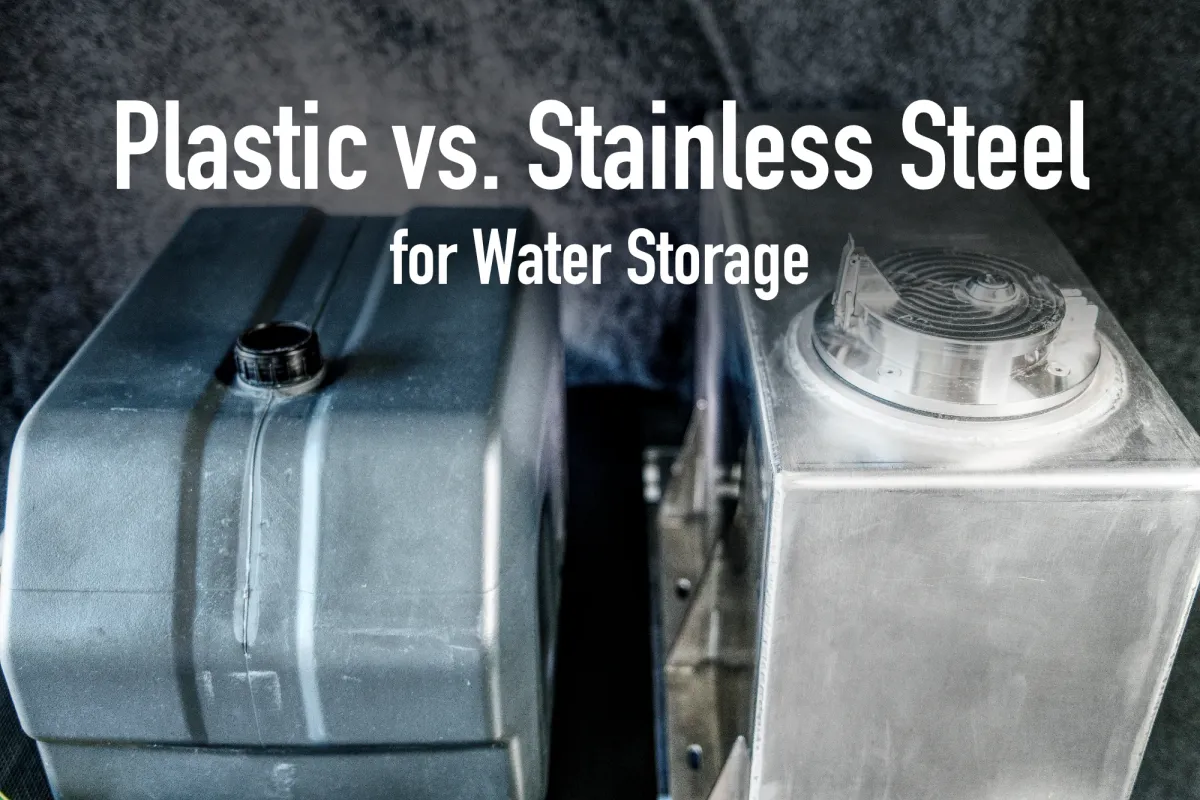
Our Front Runner plastic tank baked in the sun and gave every evening's water a faint chemical taste. That sent us back to the material data — inertness, UV ageing, biofilm, lifespan — and ultimately to building our own tank in V2A stainless steel
Introduction
A Bad Taste With Every Sip
We already had a 40-litre HDPE tank from Front Runner. It did its job — until the days got hot. The tank sat in the sun, and by evening the water we cooked with was warm and carried a faint chemical taste. Not dramatic, not dangerous on any single day. But enough to make us pause every time we filled a pot.
That taste is what sent us back to the drawing board. We've all heard about microplastics, BPA, and plasticisers — plastics are everywhere in the food chain, and mostly that's fine. But a water tank is not a mild case. It holds our drinking water for days, it bakes in the Mediterranean sun, and heat is exactly the condition under which plastic gives the most of itself to whatever it's holding.
Knowing the risk is the first step. Acting on it is the second. We decided we'd rather build once, in a material that stays out of our water — and be reminded, with every clean-tasting sip, why we did.
UV and temperature resistance
This is where HDPE has a problem it can't fully solve — only trade against itself.
UV radiation breaks down polyethylene. The energy of sunlight is enough to split the carbon-carbon and carbon-hydrogen bonds that hold the polymer together. Over time the plastic embrittles, discolours, and develops micro-cracks — and as it degrades, it releases more of itself into whatever it holds. A plastic tank has a real service life, even when it still looks intact from the outside.
Manufacturers slow this down with an additive: carbon black. It's an excellent UV absorber — instead of letting the radiation pass into the polymer layers below where it does the damage, the carbon black soaks it up. The tank lasts longer. But look at what happens to that absorbed energy: it's converted into heat. The very additive that protects the plastic from UV makes the tank run hotter in the sun, because dark surfaces absorb thermal radiation that a white or reflective surface would send back.
And heat is the second problem. Warmth accelerates both the ageing of the plastic and the migration of substances out of it into the water. So the UV protection buys longevity at the cost of temperature — the darker, UV-resistant tank is also the one that bakes hardest under a Mediterranean sun and warms its contents most. It's a genuine trade-off built into the material, not a flaw you can engineer away.
Stainless steel has neither side of this problem. UV does nothing to it. It tolerates the full temperature range a vehicle ever sees, from frost to desert heat, without ageing, embrittling, or releasing anything. The question of "how hot did the tank get today, and what did that do to the water" simply doesn't arise.
What the forums say about stainless steel — and what's true
Ask in any forum which tank material to choose, and you'll almost always get the same answer: "Plastic, definitely." Usually three objections to stainless steel follow. They're worth taking seriously — but none of them holds up as broadly as it sounds.
"Stainless steel corrodes." It can — but not because stainless rusts in general. It corrodes at one specific place: the weld. If the root isn't protected with forming gas during welding, it scales, the layer beneath is chromium-depleted, and that's exactly where pitting corrosion starts. The material isn't the problem; the fabrication is. A tank whose water-carrying seams are welded under forming gas doesn't have this weak spot. Corrosion on a stainless tank is almost always a sign that someone cut corners in the build — not that the material is unsuitable.
"The welds crack." That happens too — with poorly made seams under constant vibration. A water tank in a vehicle works: it gets shaken, the water sloshes. A porous or merely surface-run seam will eventually fatigue. A fully penetrated, pore-free weld won't — it's as strong as the sheet beside it. Again, a question of execution, not of material. And unlike a plastic tank, a stainless seam can be re-welded if it ever fails.
"Stainless steel is hard to repair." Here it's the other way around. A stainless tank is one of the few components you can actually restore with a welder — a crack is re-run, a new fitting welded in, a dent worked out. A moulded PE tank, by contrast, is usually a replacement rather than a repair: plastic welding on a food-grade, non-pressurised container is tricky and rarely stays sealed for good. Repairability is one of the strongest arguments for stainless steel, not against it.
One objection does hold: weight. A stainless tank is heavier than a plastic one of the same volume, and with large volumes under the vehicle that adds up. That's a genuine trade-off, not a misunderstanding — and the reason the right material depends on the application. For a 500-litre underbody tank the argument weighs more heavily than for our compact 40-litre drinking-water tank in the interior.
Preservation needs the right vessel
Preservation is about keeping the quality of a food over time. For water, that means: it shouldn't come out of storage worse than it went in. That's all preservation can do — and this is exactly the misunderstanding this article is about.
Preservation is not water treatment. It improves nothing. During storage, the quality of the water can only stay the same or decline, never rise. The precondition for good preservation is therefore always that the water is already sound when it goes in.
From that follows what actually matters in storage: high water quality at the fill point, and a container that doesn't undermine that quality itself — inert, migration-free, sealed. Which brings us to the real question: what should you store water in?
 Sebastian Weiß
The Options
Plastic or stainless steel — those are the choices. Plastic has some clear advantages. But stainless steel earns its place too, especially where food and water are concerned. Here's why we actually chose V2A.
HDPE / PE
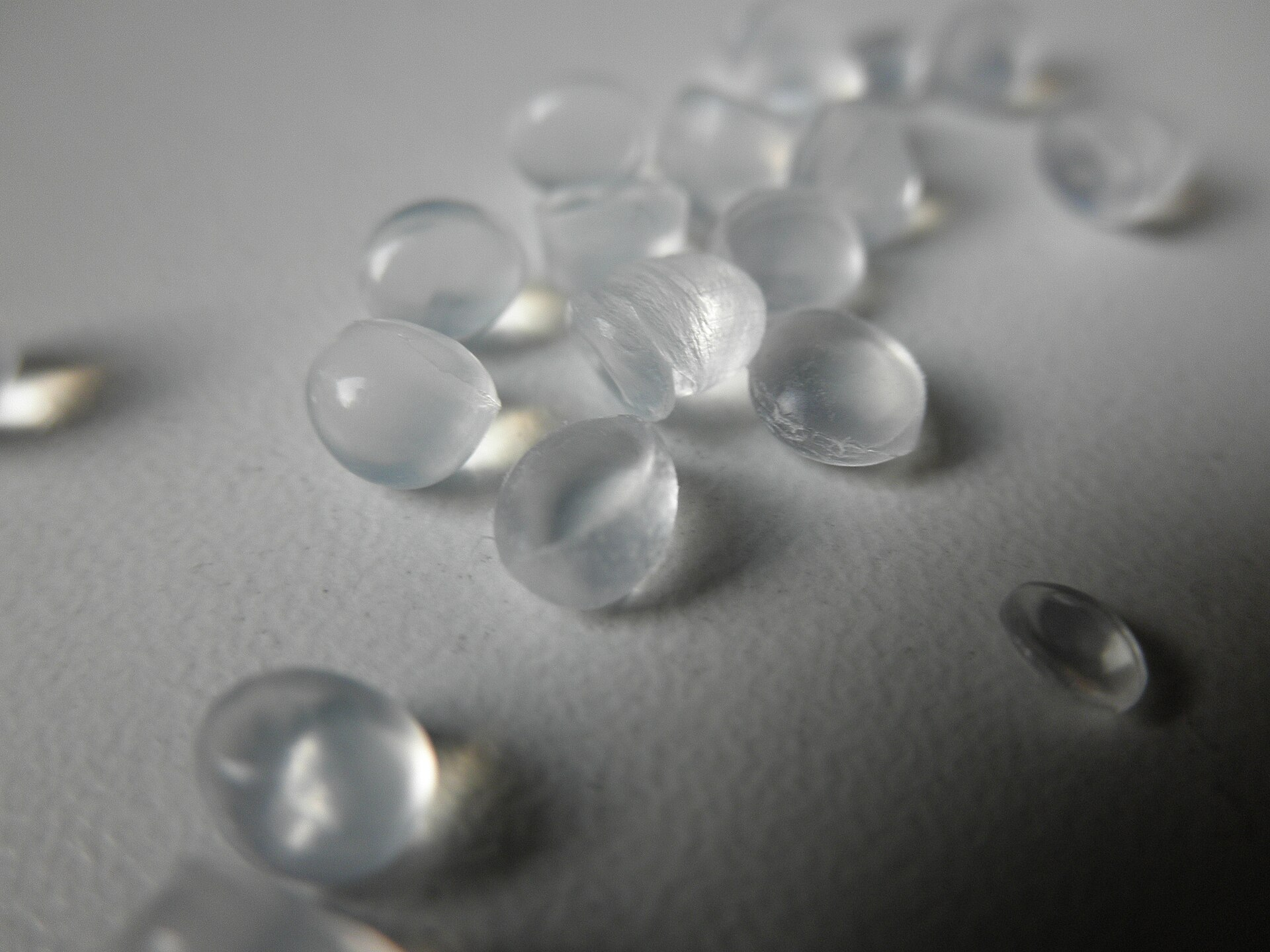
Polyethylene is a highly durable thermoplastic produced by chain polymerisation, valued for its high thermal and chemical resistance. Water tanks use HDPE (high-density PE) in particular: with a density of about 0.95 g/cm³, a melting point of 130 °C (266 °F), and a maximum continuous service temperature around 80 °C (176 °F).
Pros
- Lightweight and inexpensive
- Easy to mould into almost any shape
Cons
- Can release substances into the water — and the amount rises with age and temperature
- Degrades under UV over time, which can lead to cracks and leaks
- Limited service life
- Loses strength and stability at higher temperatures
- Low tensile yield strength (22 MPa)
- In practice usually disposed of rather than recycled
A word on that first point, because it's easy to overstate and easy to dismiss. Food-grade HDPE is approved and stays within its declared limits — we're not claiming it's toxic. But "approved" and "BPA-free" only tell you about the substances we currently test for. A polymer is a complex material, and what migrates out of it over years of heat and sun isn't something a manufacturer fully discloses; they state what they're obliged to state. It's worth remembering that PFAS were considered perfectly safe and were used everywhere — right up until they weren't. That's the pattern we're wary of, not a claim that the same chemistry is in your tank. We'd simply rather not run a multi-year experiment with our own drinking water when an inert alternative exists.
Stainless steel
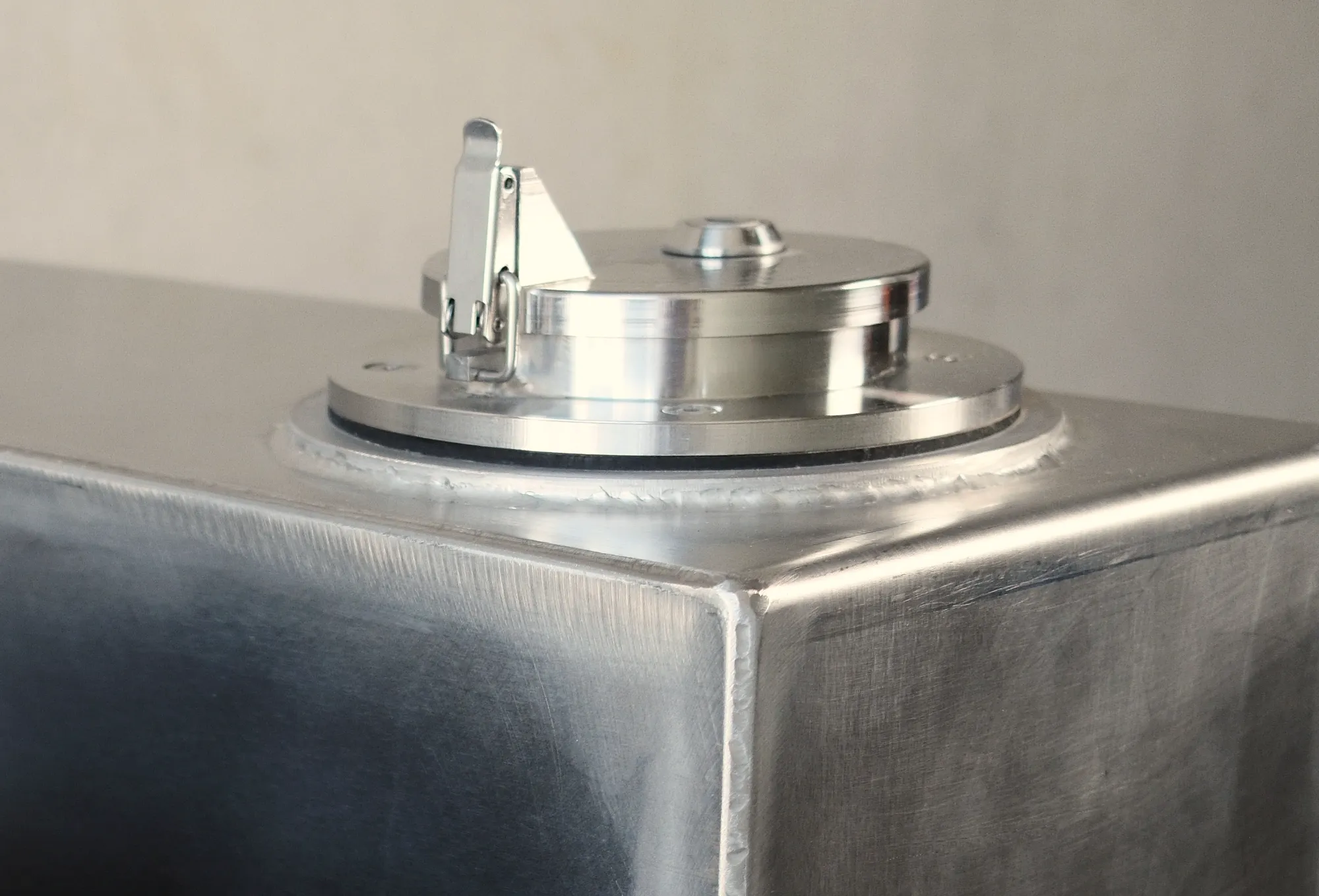
Corrosion-resistant steels (ANSI 304, 316) are grouped in Europe under the collective terms V2A and V4A. These are non-rusting, high-alloy steels, distinguished by their resistance in aggressive media and at high temperatures, using alloying elements such as chromium, nickel, and molybdenum. These high-grade steels are widely used in the food and chemical industries.
Cons
- Higher purchase price — though it evens out over the lifespan (see below)
- Manufacturing constraints limit the shapes that are practical to produce
Pros
- High durability and tensile strength (>170 MPa vs. 22 MPa for HDPE)
- Lasts a lifetime
- Fully reusable, with scrap value at end of life
- Releases no harmful substances, even under extreme conditions — ideal for safe water storage
A note on cost, since it's the one real disadvantage: stainless steel costs more to buy. But the purchase price is only half the calculation. A plastic tank has to be replaced every few years; a stainless one lasts decades, so the cost per year of use can actually be lower. And at the end of its life the two materials diverge completely — stainless has a scrap value, or can be re-worked into something else entirely, while a plastic tank is a disposal cost. The steel tank is expensive once. The plastic tank is cheap repeatedly.
What the material data says
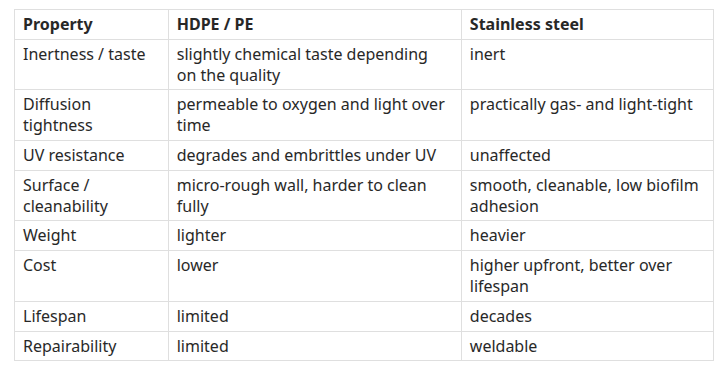
Four properties decide how a material behaves when it holds drinking water for days at a time. On each of them, plastic and stainless steel sit on opposite sides — and the pattern that emerges is the real argument.
Inertness and migration
Stainless steel gives nothing to the water; plastic can. V2A stainless (1.4301 / 1.4307) is metallurgically inert — its chromium-oxide passive layer is chemically stable, and nothing dissolves out of it into the water. HDPE is a polymer, and depending on grade and age it can release additives, plasticiser residues, or oxidation products. That's the source of the faint chemical taste some tanks pass on. To be fair: food-grade HDPE is approved for the purpose and unremarkable when new — migration rises with heat, UV ageing, and standing time. So the honest way to put it isn't "plastic is toxic" but "plastic is an active material, steel a passive one." One interacts with its contents; the other doesn't.
Diffusion tightness
Gases and light pass through a plastic wall; through steel they don't. HDPE is permeable to oxygen — over time O₂ diffuses through the wall into the water, feeding oxidation and aerobic microbial growth. And PE is translucent to varying degrees depending on colour: where light gets in, algae grow. This is the most common real-world complaint about plastic tanks — a tank that has gone green inside. Stainless steel is neither permeable nor translucent: gas-tight and completely opaque. Both drivers of biological activity — oxygen and light — are excluded from the start.
Surface and biofilm
A smooth surface gives microbes less to hold onto than a rough one. The inner wall of a ground or pickled stainless tank is microscopically smoother than rotationally moulded PE, whose surface is micro-rough. Biofilm settles preferentially in micro-roughness and crevices, where it's protected from rinsing and disinfection. A smoother surface is therefore not only less readily colonised but also more thoroughly cleanable. Here the line between fact and hypothesis matters: that the surface is smoother, and that biofilm generally prefers roughness, is established material and hygiene science. Whether our tank shows measurably less microbial growth in real storage is the hypothesis our lab test is meant to settle — which is exactly what we'll put to the test.
Longevity and repairability
Stainless steel lasts decades and can be repaired; PE has a limited service life and is usually disposable. Owners of stainless tanks report vessels still bright and deposit-free inside after twenty-plus years — a service life a plastic tank doesn't reach, even when it still looks sound, because UV and heat age it from within. And at the end of that long life, the two materials part ways completely: stainless steel is weldable, re-workable, and recyclable with a scrap value — you get money back. HDPE is a disposal cost; you pay to be rid of it. Repairability and longevity aren't just technical points here. They're the difference between something you maintain and keep, and something you replace and throw away.
How we build the tank
A stainless steel tank is only as good as its welds. Because the tank has to be joined at several seams, and because it holds drinking water, the same rule applies as for any food-grade vessel: what touches the water has to be clean, smooth, and free of places where deposits can take hold.
Two details decide whether that works.
Root protection with forming gas. Every seam that contacts the water is welded under forming gas — an inert gas that displaces oxygen on the back of the weld. Without it, the weld root oxidises and scales, and that scaled layer is chromium-depleted: exactly where the passive layer is weakest and where pitting corrosion begins. On a water tank, forming gas isn't cosmetic. It's corrosion protection on the inside surface, where you can't reach to fix it later.
Pore-free, flush seams. The welds have to be free of pores and finish flush with the sheet edges. Pores and crevices aren't just collection points for deposits — they're niches for crevice corrosion and, just as importantly, spots that can't be rinsed clean. A smooth, sound weld is what lets the tank actually be cleaned, rather than harbouring a biofilm in seams you can't reach.
There's also the matter of heat. Welding puts a lot of energy into a small area, and stainless conducts it away poorly, so the sheet can distort or bulge. This is manageable — the right fixturing and welding sequence keep distortion within limits — but it's the reason a stainless tank is a deliberate build, not a quick one. The effort goes into making it, so it doesn't have to go into maintaining it later.
Let's Be Honest About Stainless Steel
The weight and cost factor
I won't argue away the downsides of stainless steel. Cost and weight are two real factors, and in overlanding they matter. We're travelling in a vehicle, we want to save weight and fuel, and off-road every extra kilogram works against us. A stainless tank is heavier than a plastic one of the same volume — there's no way around that.
How much it matters depends on the application. For a 500-litre underbody tank, the weight penalty is serious. For our compact 40-litre drinking-water tank in the interior, it's a few kilograms we can live with. The right material isn't the same for every use case.
Cost is the one that evens out over time. A stainless tank's service life is effectively unlimited, so the price is spread across decades rather than a few years. And if you ever stop needing it, it still has value: scrap V2A currently fetches around €0.70/kg — or you simply build something else out of it. HDPE, at the end of its life, is a disposal cost and nothing more. The steel tank is expensive once. The plastic tank is cheap, repeatedly.
What about Galling?
Stainless steel has one quirk worth knowing about: galling. Thread a stainless fitting straight into another stainless thread, tighten it with a wrench, and it can seize so badly it won't come apart again.
The main cause isn't heat, though heat contributes. It's identical metal meeting identical metal. Stainless resists corrosion thanks to a thin layer of chromium oxide. Under pressure that layer tears open along the thread flanks, leaving bare metal against bare metal — same structure, same hardness. The clean surfaces fuse under pressure without melting: a cold weld. The low thermal conductivity of stainless makes it worse, since the friction heat can't dissipate. The result is a seized thread you have to drill out and re-cut.
The fix follows from the cause. Put something between the surfaces — anti-seize paste or PTFE tape — and tighten slowly rather than forcing it. Where the design allows, pair different materials, such as a brass fitting into stainless, so the faces can't bond.
It's not a reason against stainless steel, just something you have to account for. Once you know how the material behaves, it's a non-issue.
HDPE vs. stainless: the short version
We build our tanks in stainless steel for two reasons: our health, and the fact that we'd rather build our own equipment than settle for what's on the shelf. Building it ourselves means it fits our needs exactly.
As this article has shown, stainless steel has real drawbacks. In some respects plastic is clearly the better and cheaper choice — lighter, easier to form, less demanding to work with. But weighed against health, repairability, and a lifespan measured in decades, those drawbacks lost.
So I opened the CAD software and started sketching: a 40-litre stainless steel tank, with a custom inlet nozzle sized to fit my hand through it, so the inside can actually be reached and cleaned.
Cutting and bending the 3 mm V2A sheet, turning and milling the fill nozzle, and the final welding took time — and the prototype cost us over €2,000 to build. Expensive for a water tank. But it's built once, it's built right, and it will outlast every plastic tank we'd have bought in the meantime. For us, that trade was worth making.
Why We Build Our Tanks in Steel
We build our tanks in stainless steel because we value our health and we love to build and develop our own equipment. That way we ensure our equipment perfectly fits our needs. As we pointed out in this article, stainless steel has its drawbacks and at some points, plastics are clearly superior and cheaper. On the other hand, health and repairability and longevity are more important!
I sat down and started the CAD PC and began sketching a model for a 40 Liter stainless steel tank. I designed the tank and the custom inlet nozzle to fit my hand through to access the inner for proper cleaning.
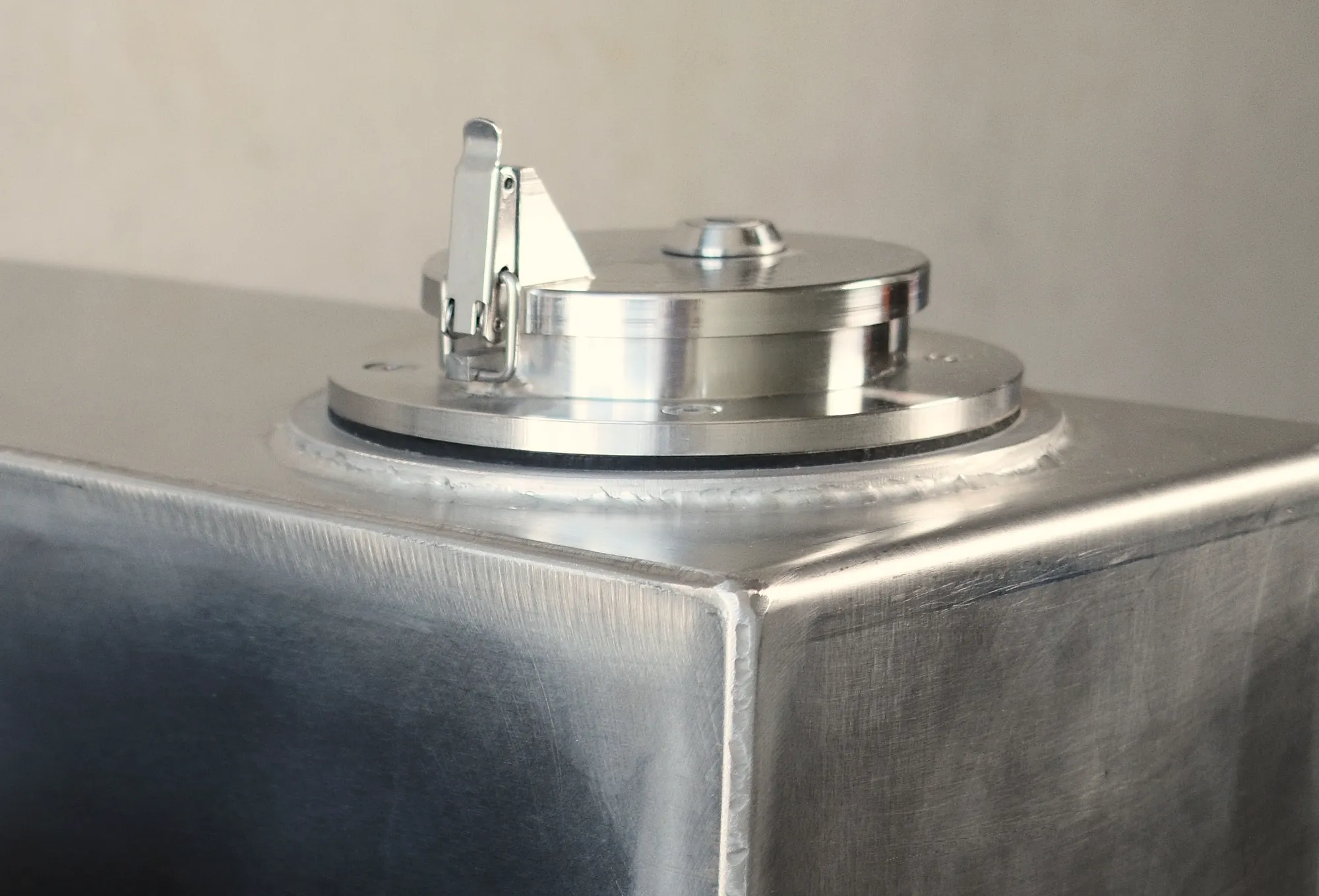
Cutting and bending the 3 mm V2A sheet metal, turning and milling the fill nozzle, and the final welding took some time and ultimately cost us over 2,000 € to produce the prototype. But it was worth it to us—for the sake of our health.