
Water Filtration for Overlanding – Why RO is Overkill
RO (Reverse Osmosis) removes everything from your water — including the things you actually need. After many overlanding trips and a few questionable water sources in Spain, here's why we built our own system instead.

When developing the Pump Case for our overlanding trips, I deliberately chose not to pursue a reverse osmosis system. I opted for a multi-stage filtration solution instead — and in this article I'll explain why.
About Filtration Technologies
Mechanical filtration uses a membrane to retain contaminants and purify water. A pump is required to push the water through the membrane. These membranes can vary in pore size depending on the application. Membranes are classified by their retention capability into the following categories:
- Microfiltration (pore size 10 – 0.1 µm)
- Ultrafiltration (0.1 – 0.01 µm)
- Nanofiltration (0.01 – 0.001 µm)
- Reverse Osmosis (< 0.001 µm)
Smaller pores mean higher pressure, higher energy consumption, and more wear. The Pump Case uses ultrafiltration, operating at approximately 3.5 bar with a flow rate of 10 L/min (2.6 GPM) after all filters.
Our Pump Case Rev. A delivers a flow rate of 10 L/min (2.6 GPM). A typical camping RO system manages 0.3 L/min (0.08 GPM).
Watch out: manufacturers like Blaufaktor GmbH & Co. KG sell a "nano filter" for campers. But this filter has a pore size of 0.1 µm (= 100 nm) — which puts it firmly in the ultrafiltration category, not nanofiltration. It's worth paying attention to these details and contacting the manufacturer directly if needed to find out the actual effective pore size.
Other methods for producing drinking water include the inactivation of microorganisms using UV light or chemical agents such as chlorine compounds. UV treatment requires the water to be clear and the exposure time in the UV unit to be sufficient — only then can enough energy be delivered to inactivate microorganisms and ensure the UV radiation penetrates the water effectively.
On a private pitch in Spain, we drew water from a tank on the property. The owner assured us it was safe. He had thrown a chlorine tablet into the tank before our arrival — or so he said. The tank sat further up the property and was refilled periodically by a water truck. Over the course of the day, the tank heats up to 50°C or more. This kind of system is problematic for several reasons. The plastic tank and pipework heat up to 50°C or more in the midday sun, leaching plasticisers and microplastics into the water. Relying solely on chemical disinfection with chlorine compounds is highly questionable and insufficient. Several protozoan species are highly resistant to chlorine. Such a system can also promote algal growth, which releases cyanotoxins into the water. A further issue is biofilm, which can develop undisturbed in a closed system at high temperatures and serves as a breeding ground for pathogens. Legionella thrive in exactly these conditions — which is why hot water systems are specifically designed to heat water above 60°C to kill them. Regular chemical or mechanical cleaning of the system is therefore essential.
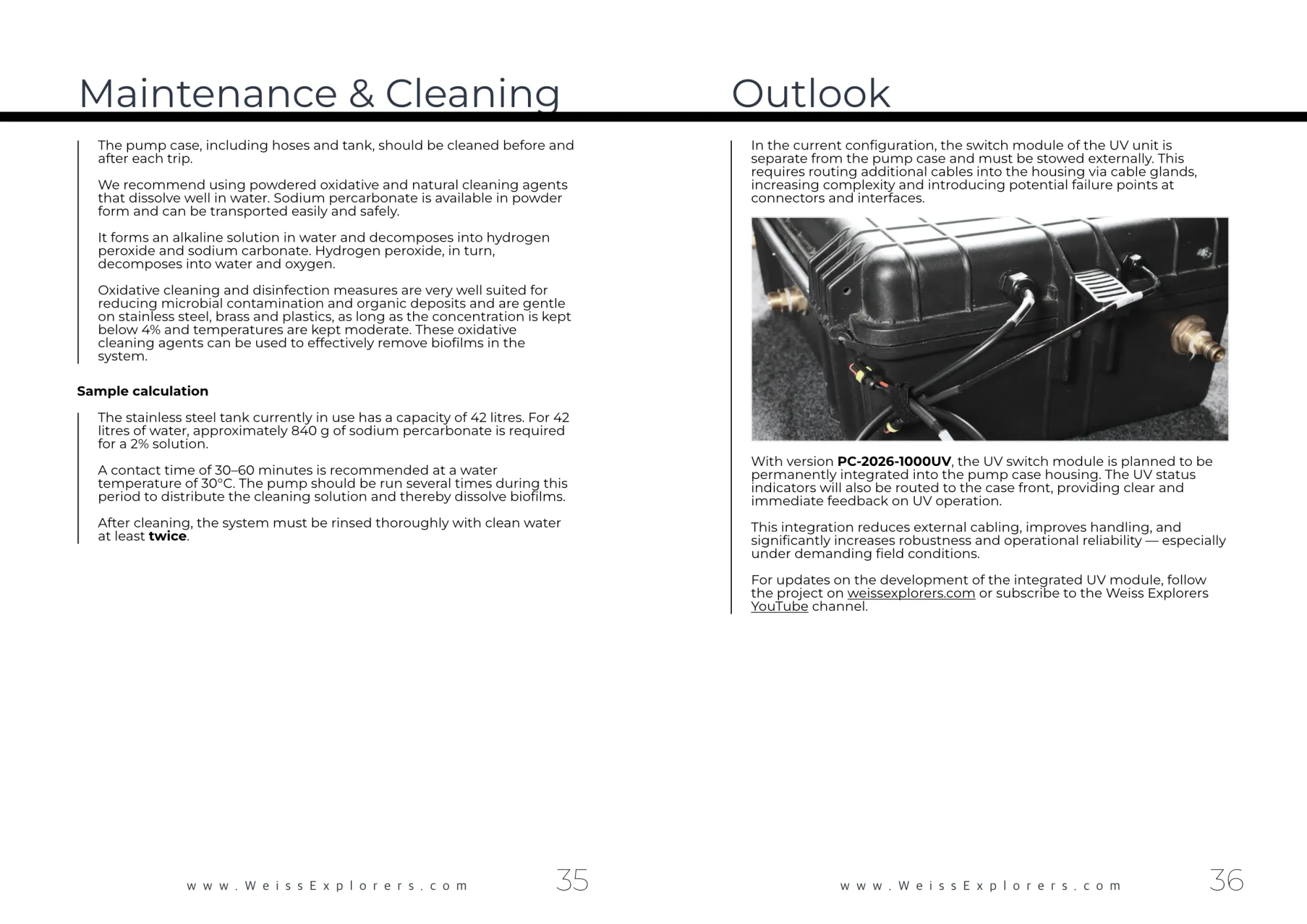
One thing that's easily overlooked is the need to clean the tank and all water-carrying lines after extended periods of non-use. Sodium percarbonate is an effective chemical option. Without this, biofilm will build up — and biofilm means a breeding ground for pathogens. The best filtration system in the world is useless if there's a biofilm in your water tank.
What are the key factors for producing safe drinking water on the road?
- What water sources will be used?
- What quality does the treated water need to meet?
- Flow rate of the system
- Energy consumption of the system
- Cost, maintenance, and ease of use
At the end of the day, the filtration technology itself is not the most critical factor. What matters just as much is choosing a suitable water source and maintaining the filtration system properly.
Background
Anyone who takes clean drinking water seriously while overlanding will inevitably come across RO systems during their research. These systems force water through a semipermeable membrane. With an effective pore size of < 0.001 µm (< 1 nm), virtually everything is removed from the water — including dissolved minerals and salts.
The central question is: do you actually need an RO system as an overlander? Optimal protection against pathogens depends on several factors — including regular maintenance of the filtration system and choosing a suitable water source.
When you're on an overlanding trip, what you ultimately want is a system that's easy to maintain, has low power consumption, and is affordable to run. However, there are some drawbacks to consider ...
Important RO Drawbacks
Low flow rate — The first thing that stands out about RO systems is their poor flow rate. Many RO systems deliver 0.3 L/min (0.08 GPM) or less. A popular under-sink system like the iSpring RCC7AK produces 75 GPD — that's roughly 0.05 GPM or 0.2 L/min. Our Pump Case delivers 2.6 GPM. You do the math.
Pre-filter required — RO systems need a good pre-filter to remove suspended particles. That's an additional stage requiring maintenance — without it, the RO membrane clogs quickly.
High energy consumption — Smaller membrane pores require higher pressures, or flow rate suffers. Higher pressure means more pump power, which increases bearing wear. Drawing higher currents from a 12V system over extended periods demands a capable battery setup.
Low efficiency — RO systems operate at 30–40% efficiency. For every 10 litres processed, you get a maximum of 4 litres of clean drinking water. The remaining 6+ litres is highly concentrated wastewater — bad for the environment, and a real problem when water is scarce. With our Pump Case: 10 litres in, 10 litres out.
Low pH — RO water is mildly acidic (pH 5–6) because CO2 is not fully removed and there are no minerals left to buffer it. This pH range reacts aggressively with pipe and tank materials, and is not ideal for the body over the long term.
Missing minerals — The WHO recommends minimum levels of calcium and magnesium in drinking water. Pure RO water doesn't meet these standards. Some systems add a remineralisation filter as an additional final stage — which again means more cost and maintenance.
Recontamination — Minerals paradoxically inhibit bacterial growth in pipes and tanks. Demineralised water is more aggressive and offers less competition for pathogens — increasing the risk of recontamination after the filter.
Introducing the Pump Case
The Pump Case is a modular and portable system for producing drinking water on the road. Ideal for overlanding trips — it runs directly off a 12V onboard power supply or a 230V AC source.
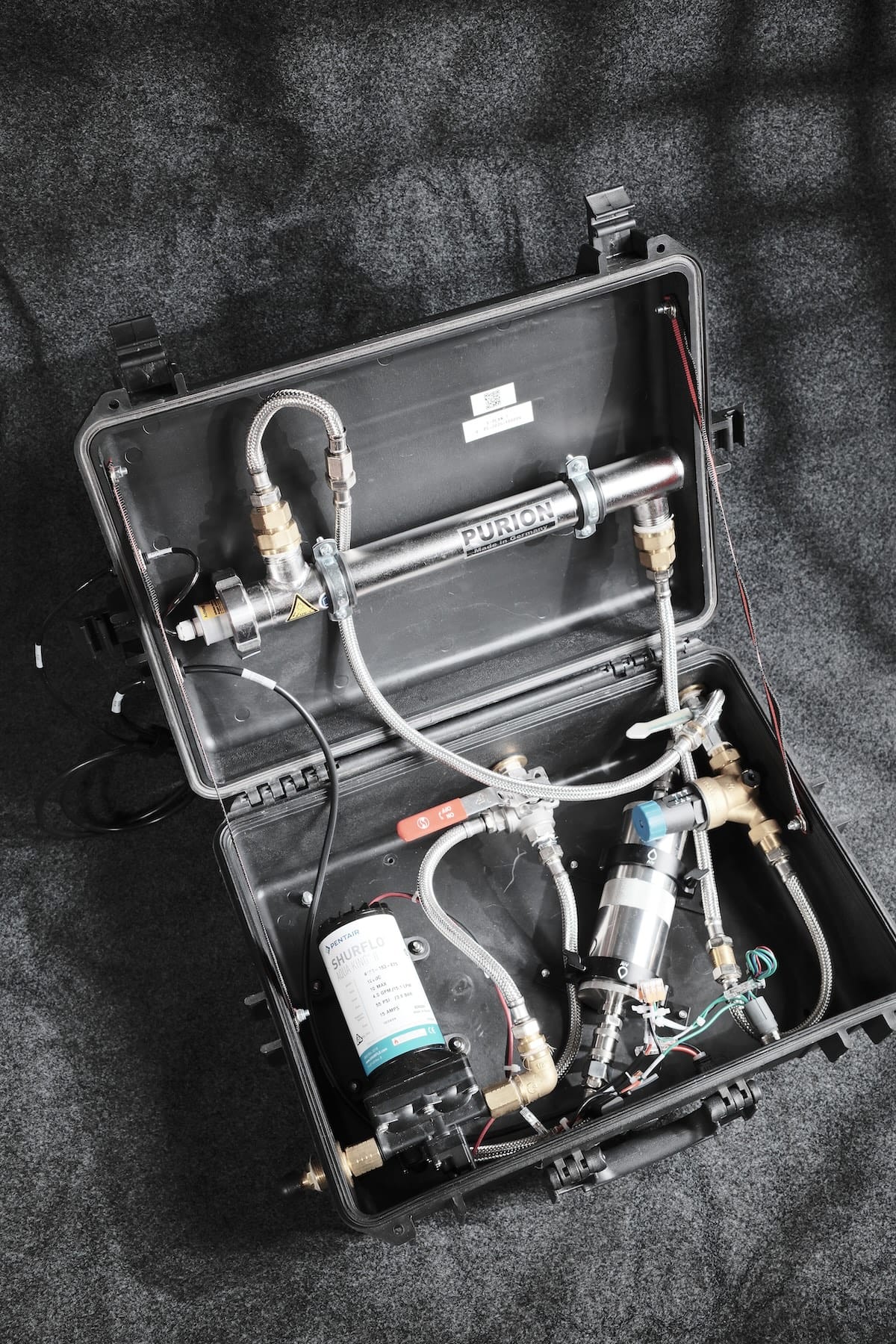
I developed this system out of the need for a robust and portable water treatment solution for our overlanding trips. I deliberately chose a multi-stage filtration approach that is fail-safe and easy to maintain. It consists of the following filter stages:
- Pre-filtration with metal mesh
- Sediment filter — 30 µm pore size
- Activated carbon filter
- "Nano" filter — 0.1 µm pore diameter (ultrafiltration)
- UV sterilisation unit
The coarse pre-filter protects the pump. The sediment filter protects the activated carbon filters on the pressure side of the pump. The combination of mechanical filtration and UV inactivation provides a fail-safe barrier against bacteria, protozoa, and viruses. PFAS, pharmaceutical residues, and cyanotoxins are handled exclusively by the activated carbon filters.
The Pump Case offers real advantages on our trips. We designed and built it ourselves — we know the system inside out. It's easy to maintain, and with a flow rate of 10 L/min after the filters, it produces more than enough drinking water for all our everyday needs. Water quality is excellent: the ultrafiltration membrane, UV unit, and activated carbon filters work together as a fail-safe system.
Choose the right water sources, keep the system clean with regular checks and maintenance, and the Pump Case will never let you down.
Clicking this link will load the video from YouTube. This will result in data being transmitted to Google. Privacy Policy.
We have tested our Pump Case on the Verdon in France, in Italy near the Lago Maggiore and in Spain at the Ebro Delta. Every situation, every water source — different. The Pump Case handled it all.
Subscribe and get the Pump Case Blueprint for free. The full Build Guide — with every detail you need to build your own — is available now!
What's inside
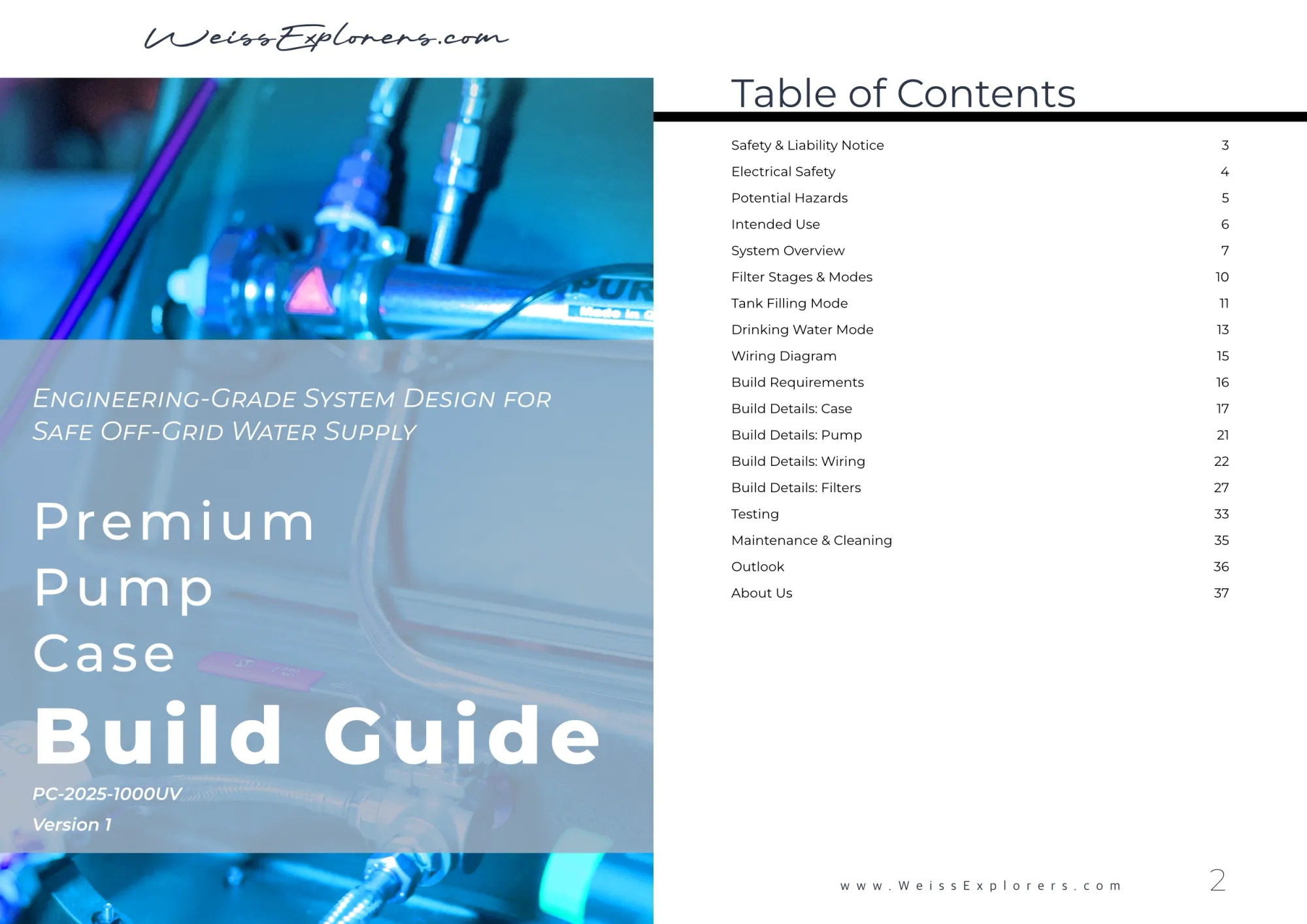
- 37 pages of technical documentation
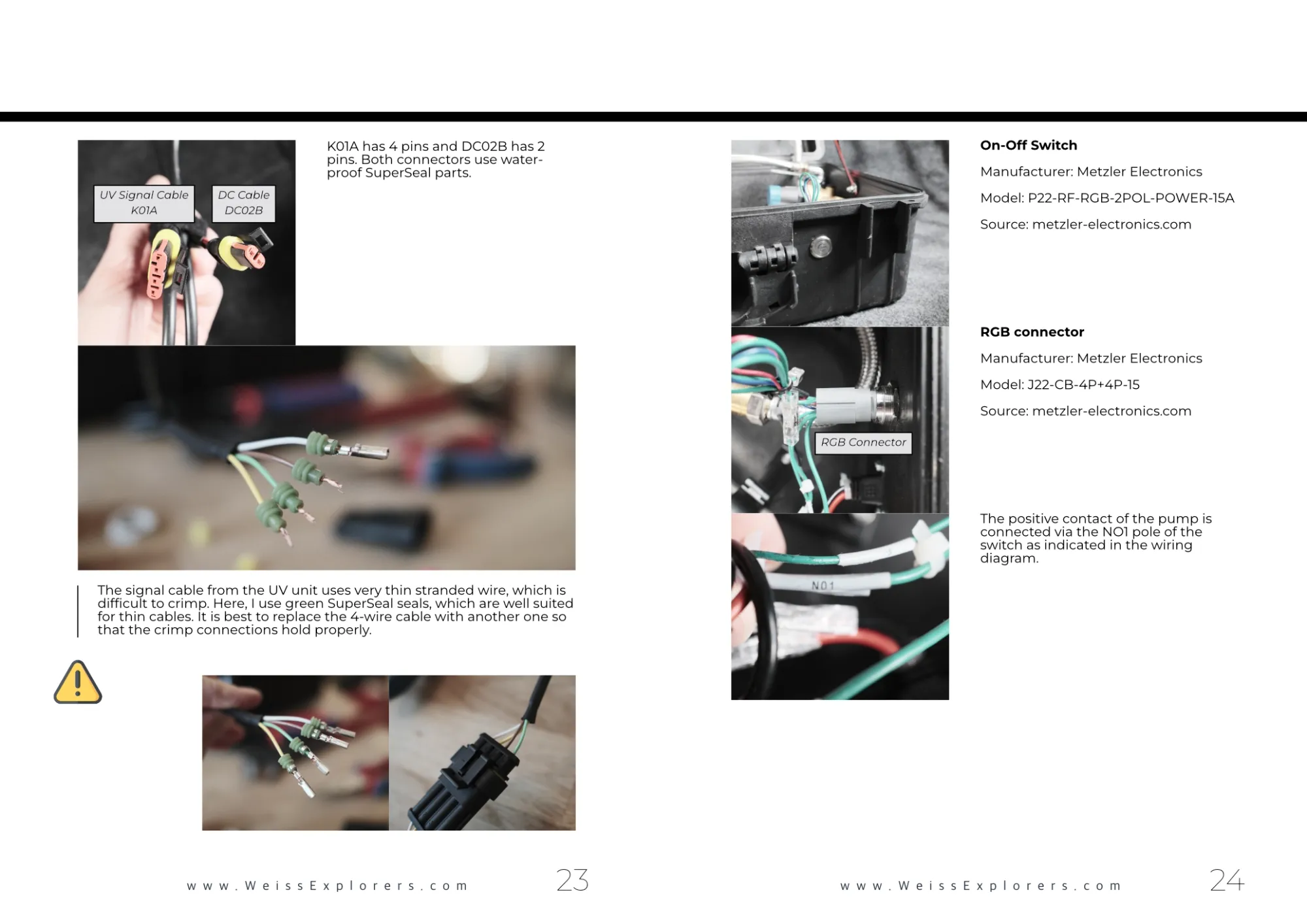
- Step-by-step assembly — from components to working system
- Electrical wiring diagram — the complete circuit, drawn out
- Check and test sequences — how to verify the system actually works before you rely on it
- Component list with sources — exactly what to buy and where
Not sure yet?
Start with the free blueprint — it shows the system architecture at a glance, no purchase needed. Just sign up for our newsletter.