
Adventure Engineering - Why We Build
For us, DIY isn't just a style—it's a philosophy: understanding what you have, knowing your limits, and taking responsibility for it. Why we develop systems like the Pump Case ourselves—and why it's more than just a hobby.
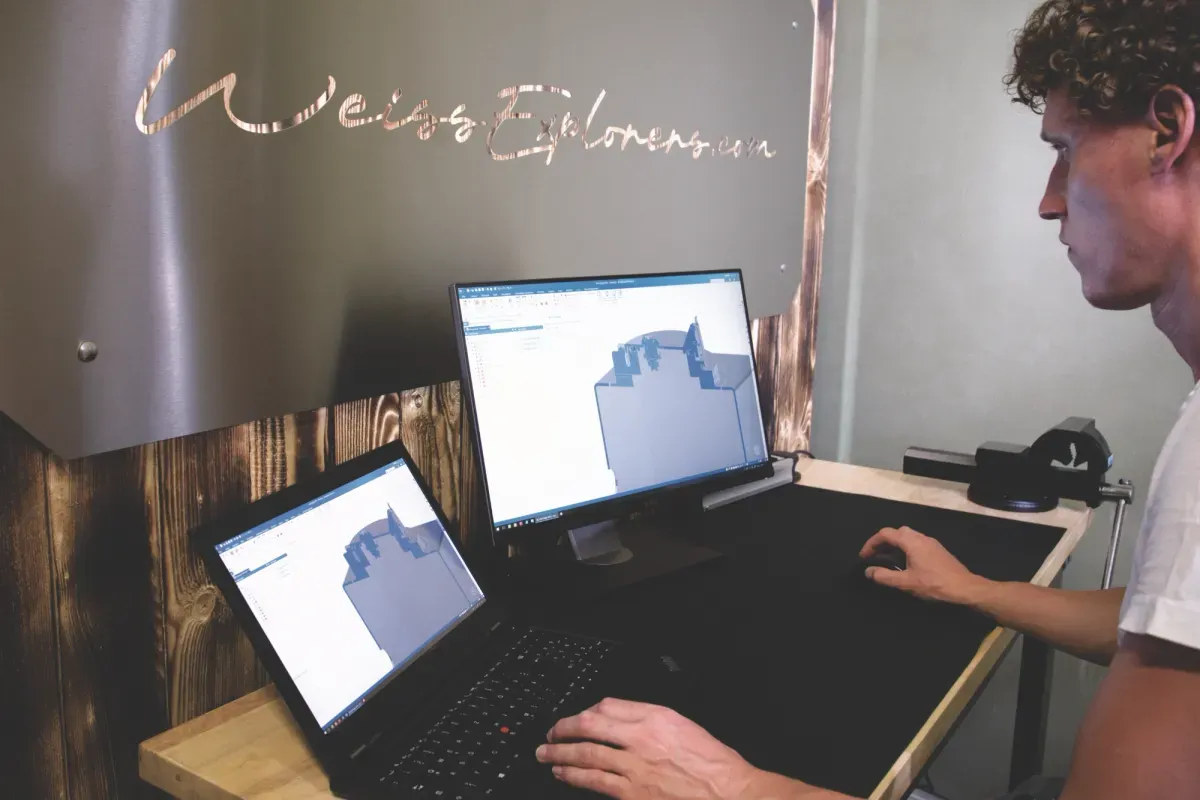
DIY is the philosophy we live by. The systems we build for the field are an extension of the same thinking we apply everywhere else: understand what you have, know its limits, and take responsibility for it. WeissExplorers grew from that mindset, not the other way around.
This mindset touches many areas of our daily lives — from technical projects to the bread on the table. DIY is not a hobby for us, but a conscious choice. Everyone has different requirements for the hardware they use outdoors. Some deliberately invest in a complete system and trust it. Others choose to combine individual components themselves and build their systems independently.
Over the past few years, we have noticed that price and quality are drifting further and further apart. A high price is no longer a reliable indicator of robust, well-thought-out systems. This doesn't apply to everything — but especially where it really matters, in the field and far from infrastructure, this difference becomes noticeable.
In such situations, reliability, repairability, and health-safe materials matter more than marketing promises or feature lists. Price loses its significance when a system must perform at the critical moment.
Equally important is a system you understand. A system whose construction, function, and weak points are known — and that can, if necessary, be repaired by yourself. Open documentation and transparent technical decisions are therefore a central part of our requirements.
My experience as a mechanical engineer and the intensive engagement with durable and health-safe materials have clearly defined these requirements:
- Repairability over replacement
- Modularity over monolithic systems
- Robustness for real-world use, not for catalogues
- No planned obsolescence
- Deliberate material selection with an eye on health and longevity
- High component quality
- Open systems you understand
- No software lock-in
- Iterative improvements rather than "final" solutions
Our Land Cruiser was not meant to become a camper. We wanted to continue using it flexibly — including for heavy or bulky loads — without having to remove permanently installed tanks, filter systems, or solar systems every time.
The only fixed installations are the panels and the storage box drawer. These are elements we use permanently, because they create order and make storage space efficiently usable. Everything else needed exclusively for camping remains modular and removable.
Developing these systems brings me joy. Testing teaches me, and when something doesn't work, it gets adjusted — until it works reliably.
That is exactly why we document our builds in detail. Not as inspiration, but as functional systems. In our Build Guides you will find the complete documentation. On YouTube we show field tests under real-world conditions, and in our blog articles we go into the technical and scientific background.
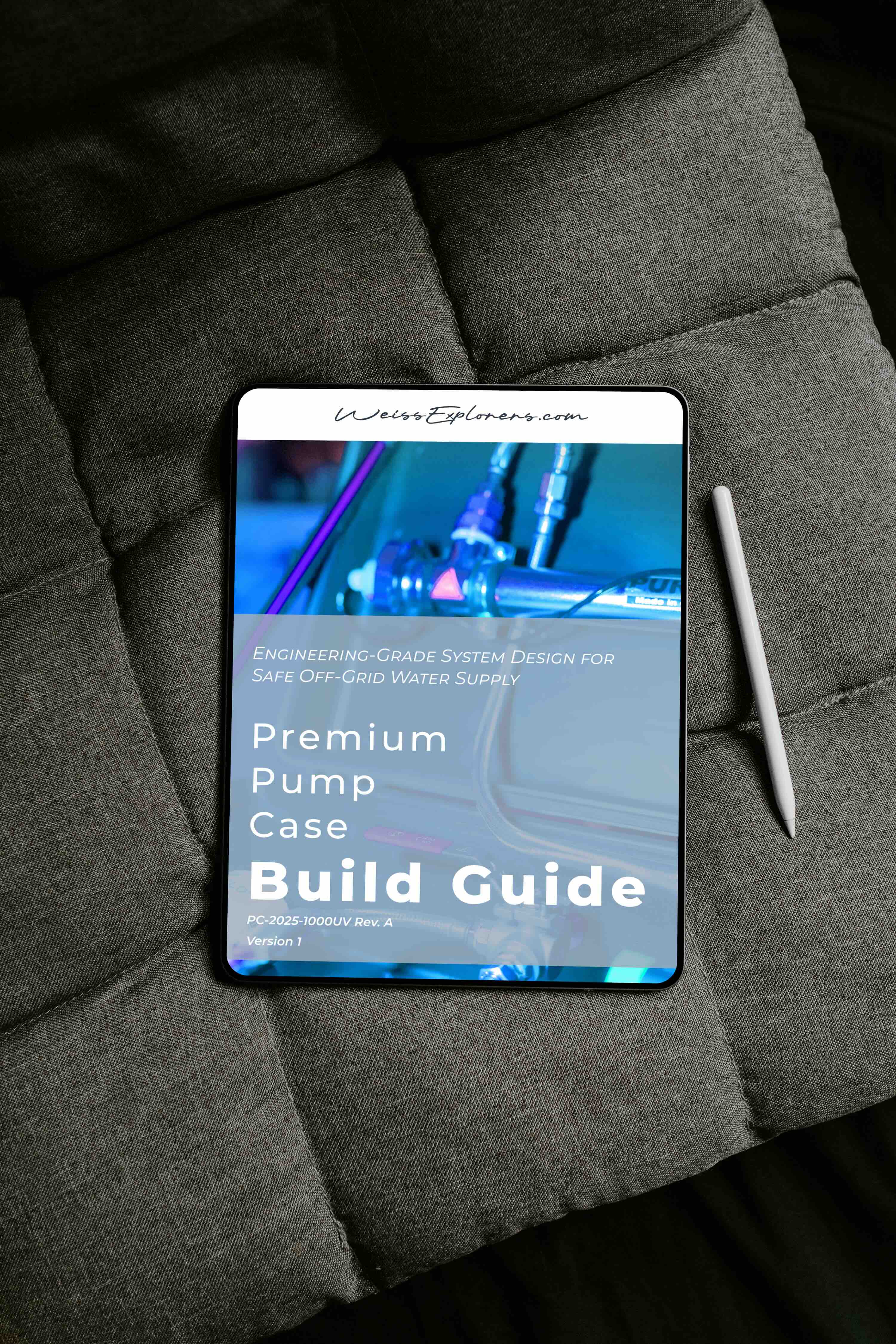
This is the reason we document our builds in detail — not as inspiration, but as working systems. See for yourself at our official Webstore:
I build systems to understand how they work, to learn new skills, and to be able to fix them when they break. This matters most when you are far from civilisation and any form of support.
At WeissExplorers, we build our own systems when the market consistently fails to meet our requirements. Things like repairability, modularity, and open documentation are rarely found in off-the-shelf products — and almost never in combination. For critical hardware, this becomes unacceptable.
Beyond supplier reputation, the requirements we consider non-negotiable are:
- No planned obsolescence
- Deliberate material selection
- Repairability
- The possibility of iterative improvement
Repairability means that all components can be serviced by a non-technical person with proper training, and that spare parts are available worldwide. Any system with a non-repairable single point of failure is, by definition, not repairable — regardless of how serviceable its other components are.
A commercial system may be extended — you may be able to add panels, upgrade a battery, buy a larger module. But extension is not improvement. Improvement means understanding a weak point and fixing it at the source. That requires access to the component itself, and the knowledge of how it works. No black box can give you that - only DIY can.
The Development of the Pump Case
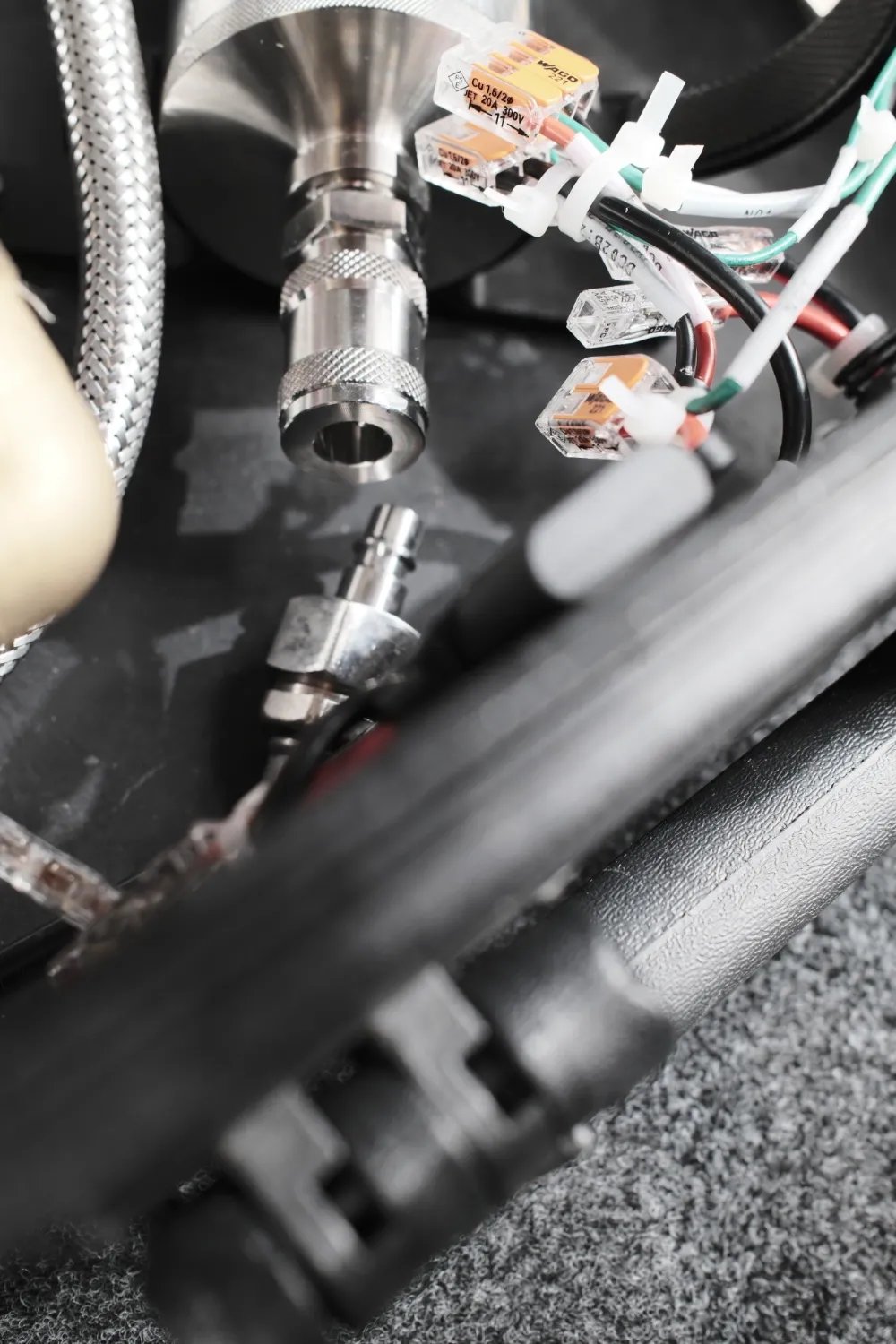
Take the Pump Case as an example. It is one of the most critical systems we carry — it produces our drinking water, far from any infrastructure. For a system like this, I need to know exactly what I have. Not what a manufacturer claims in a product description, but what the system actually delivers: the exact filtration performance, the UV dose, the flow rate, the materials in contact with the water.
Building a reliable water filtration system starts with understanding what you are actually filtering out. Different pathogens in surface water — bacteria, protozoa, viruses — require different technologies to remove them. Each of these technologies has limits, and knowing those limits is not optional. It is what separates a system that works from one that merely appears to work. A manufacturer may claim that a filter removes 99.999% of all pathogens. That sounds reassuring — until you ask which pathogens. A hollow fibre membrane with 0.1 µm pore size will reliably remove bacteria and protozoa. Viruses are a different matter. Most are small enough to pass straight through. If the product description does not mention viruses, that is not an oversight. It is a gap you need to know about.
 Sebastian Weiß
The only way to know this with certainty is to build it yourself, test it, and iterate until the results are consistent and reliable.
The Pump Case took several thousand euros and a significant amount of time to develop and test.
Currently I am working on a revised version of the pump case for which I will soon share a video of the build process - stay tuned for updates!
That is not a failure of the DIY approach — it is the approach. Every iteration taught me something. Every failure narrowed down the problem. The result is a system I understand completely, can repair in the field, and trust without reservation.
This is the foundation of DIY as we practice it: time, money, and a certain technical background. But above all, it is the desire for a system that is truly yours — one you understand, one you can fix, and one you can rely on when it matters most.
When you buy a system, you trust the manufacturer to have done good work. When you build it yourself, you trust yourself. For critical systems — far from infrastructure, far from any support — that distinction matters more than any feature list or certification ever could.
Make it Open Source
DIY means different things to different people. For some, it means buying a set of components and connecting them together. For others, it means understanding a system from the ground up — the physics behind it, the failure modes, the limits of each component. The term is the same. The outcome is not.
The idea behind DIY, as we practice it, also means sharing what you have learned. The open source philosophy is deeply embedded in this approach — not just building systems you understand, but documenting them so others can understand, replicate, and improve them too. A system that only you can build is useful. A system that anyone can build, repair, and adapt is something more.
WeissExplorers’ systems are designed to deliver a sustainable overlanding experience – they are built for durability and reliability in off-road conditions.